In many cultures, attire and adornments are expressions of personal and group identity, as well as temporal and spiritual power.
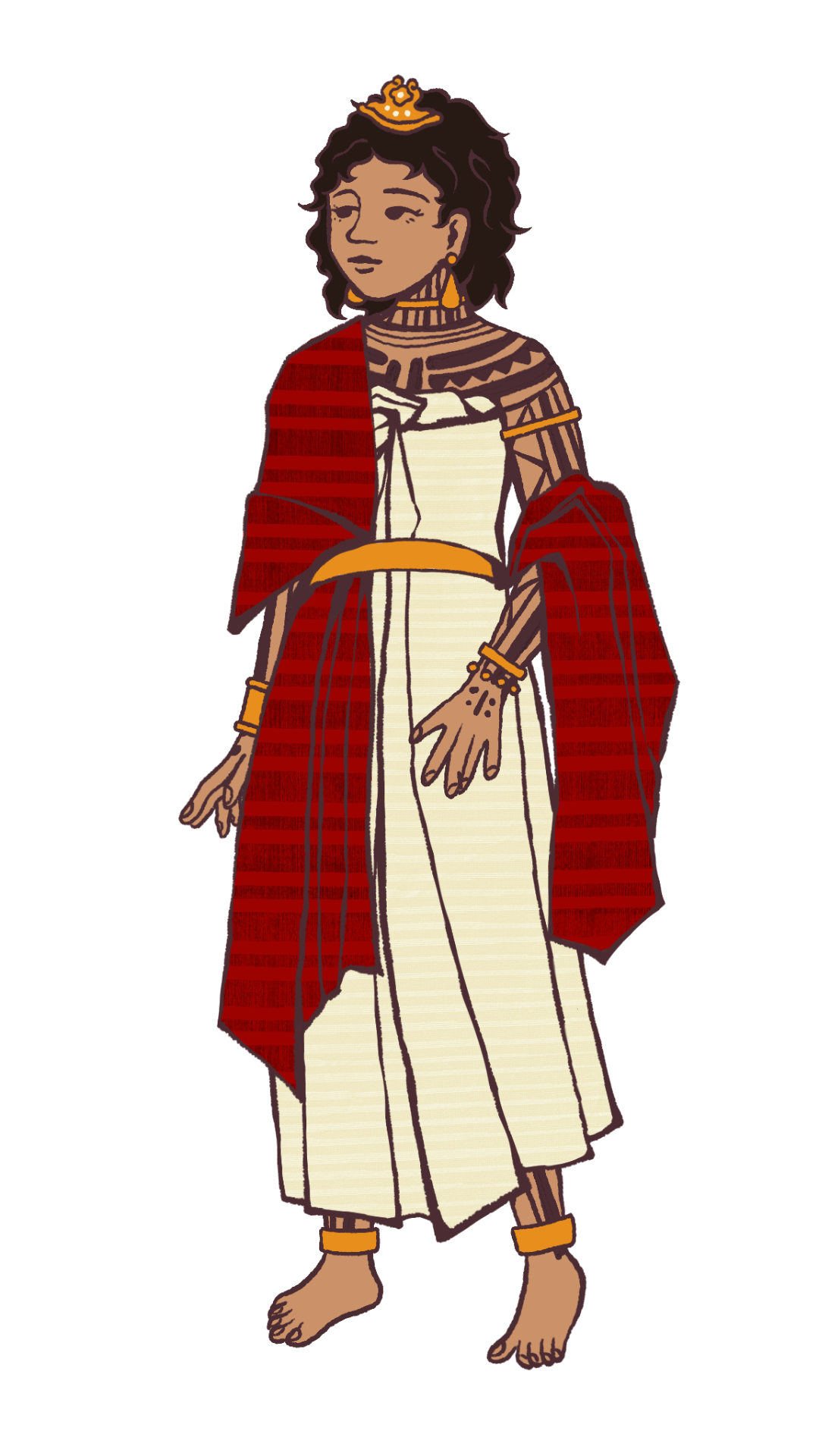
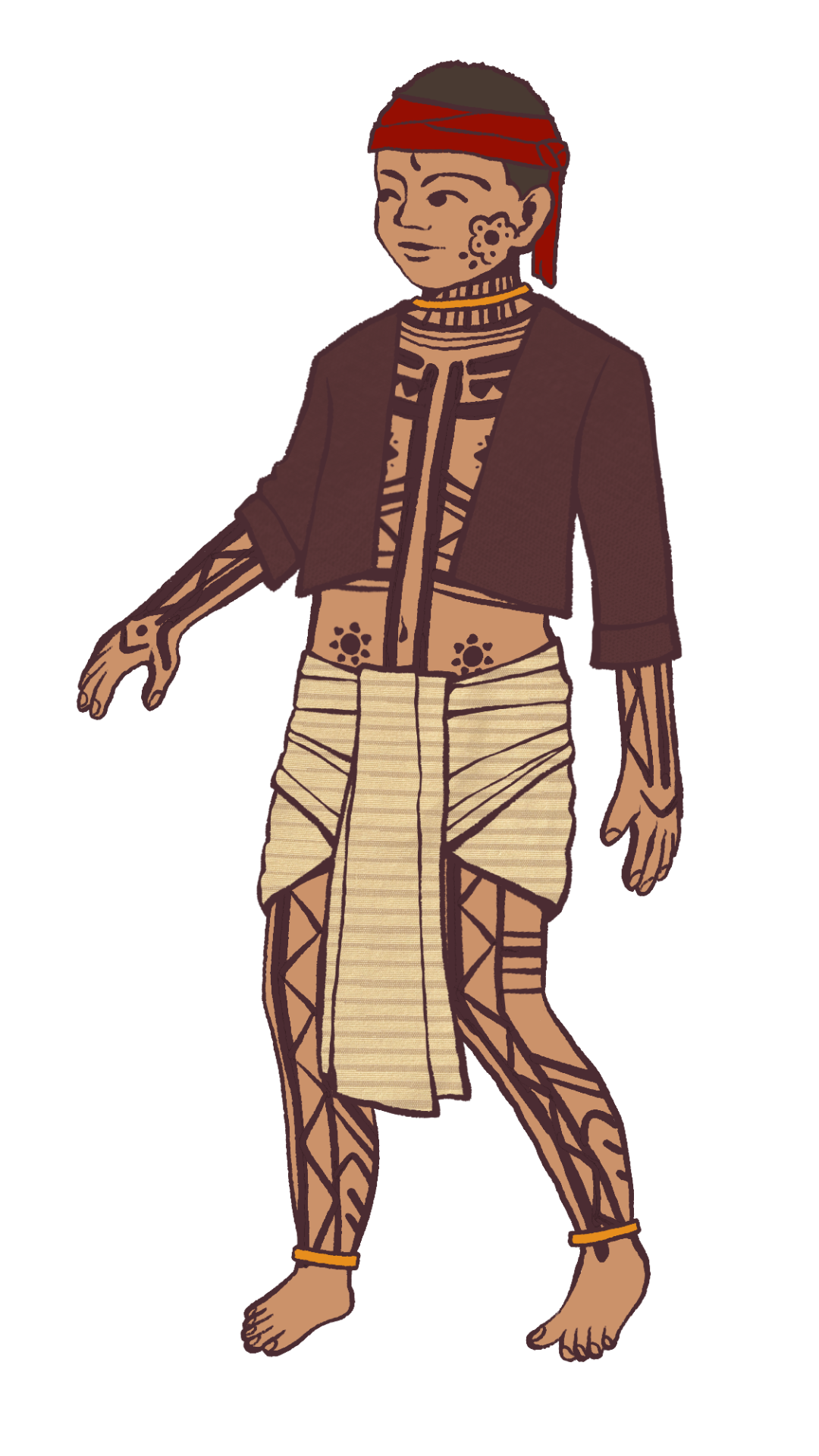
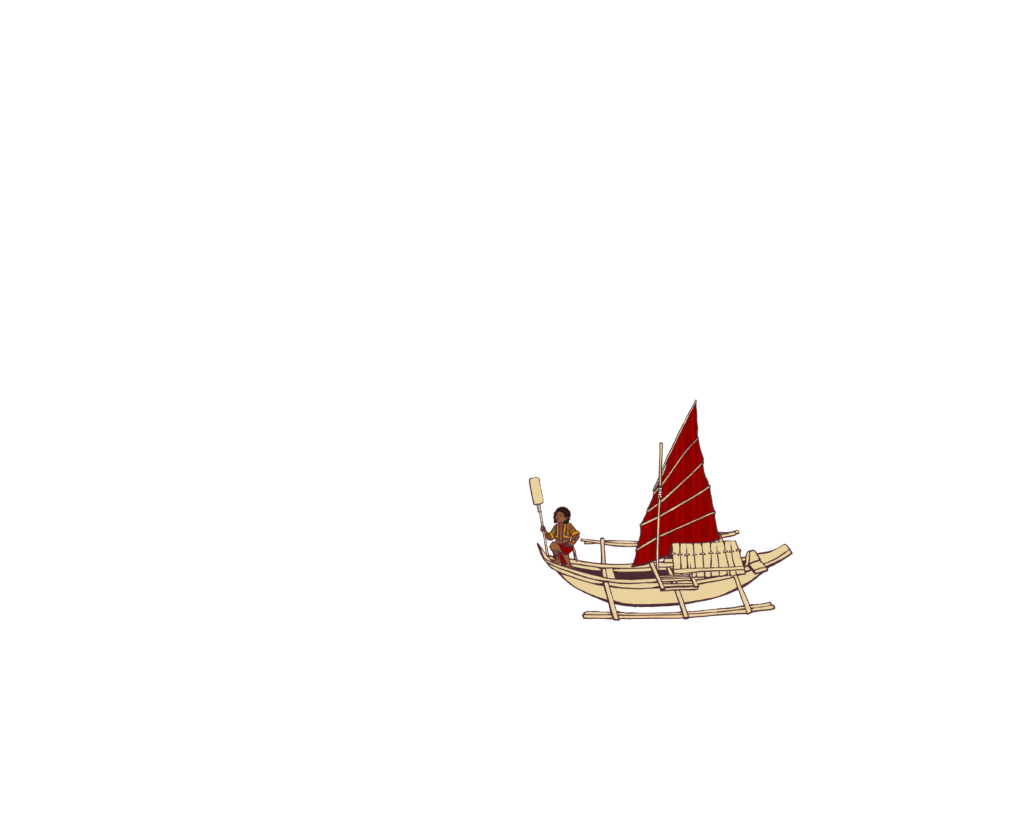
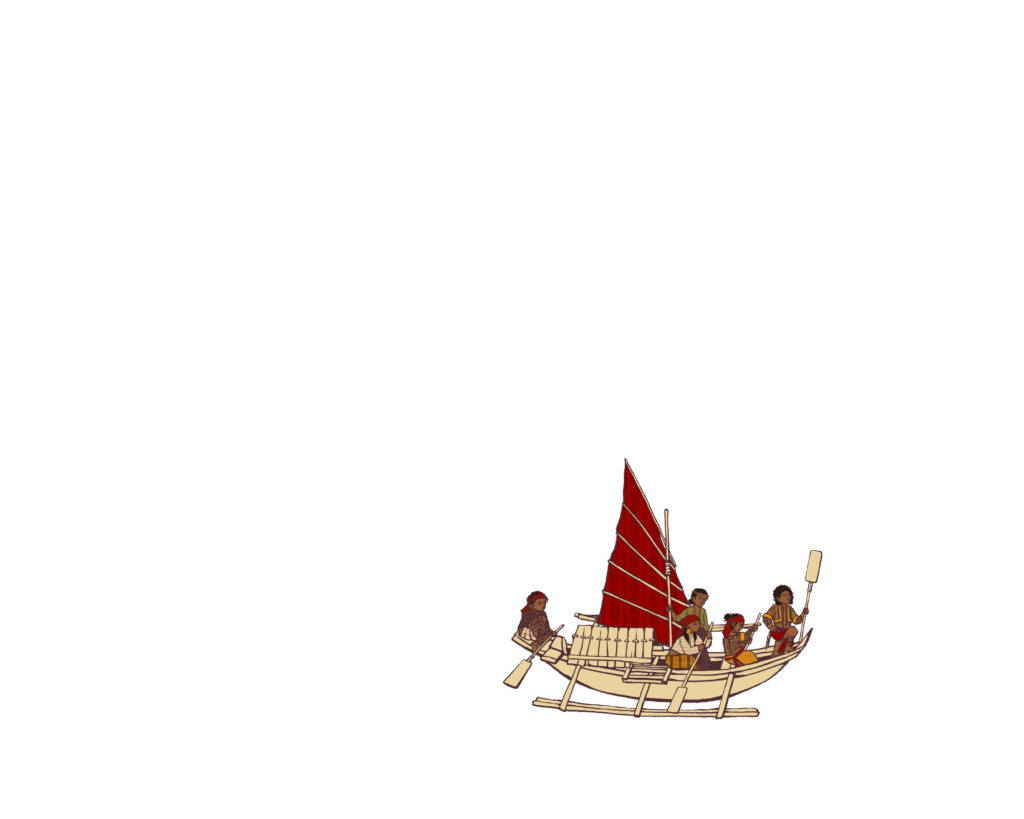
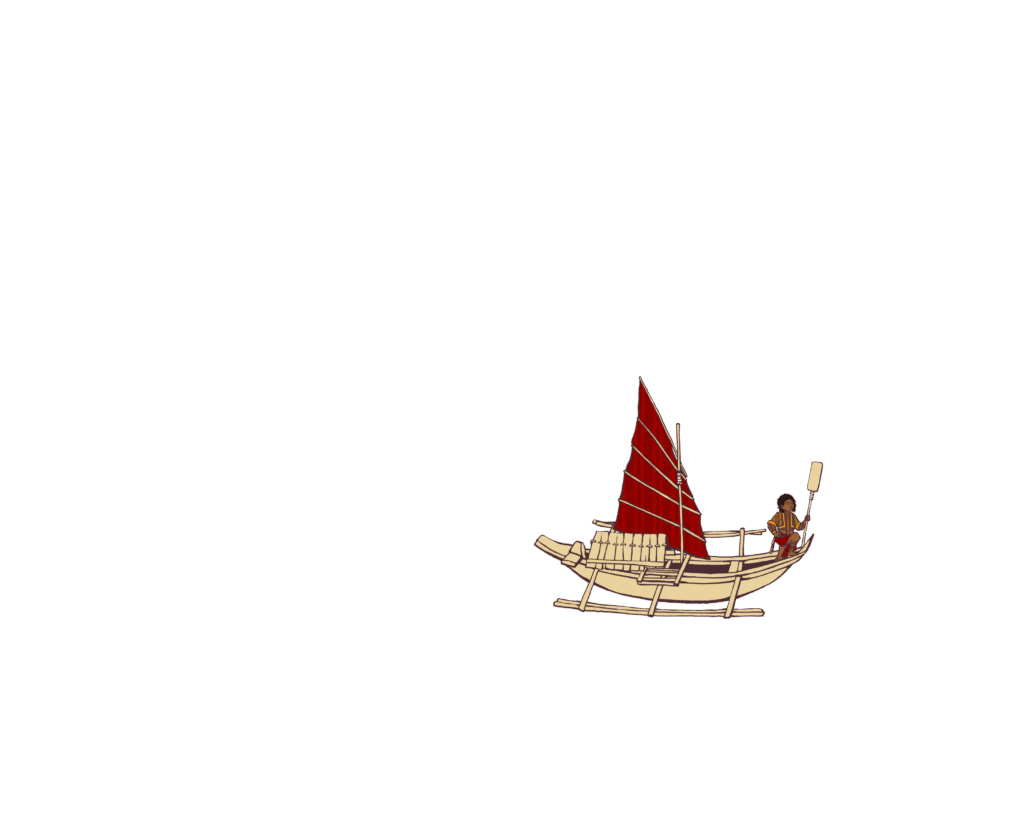
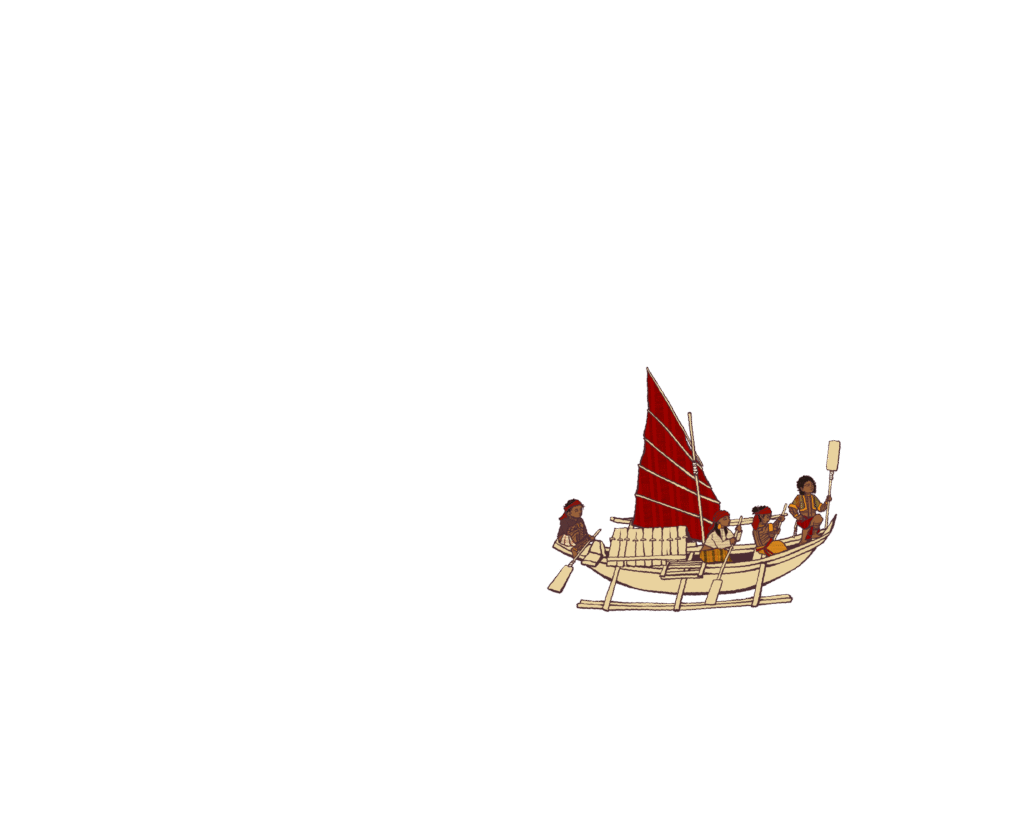
Follow the five travellers as they observe the simplicity of native Filipino life and the transformation of pre-colonial Visayan garments that brought cultural changes caused by the three colonial regimes that ruled the Philippines during the 15th to 20th century.
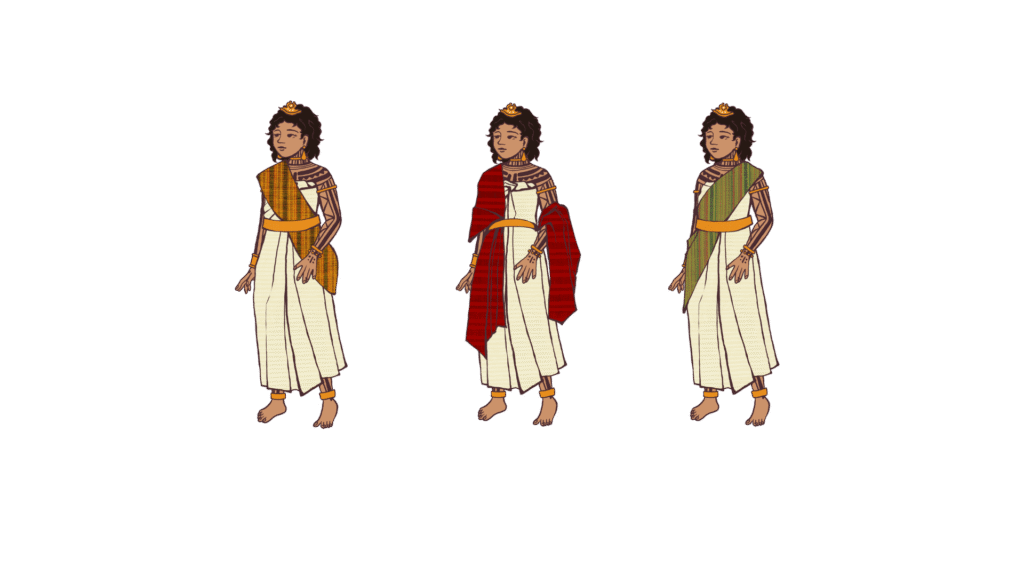
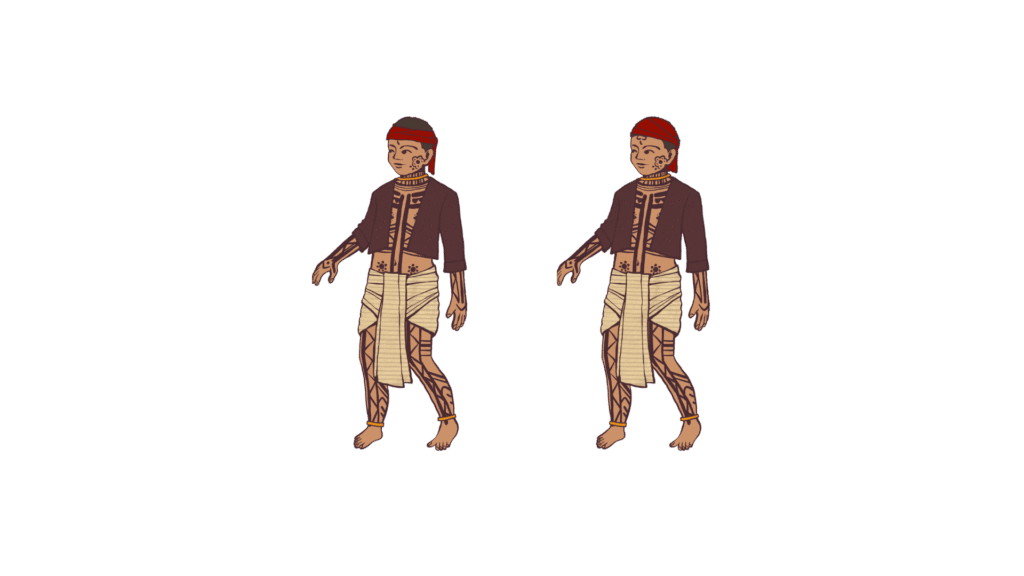
Discover the vibrant weaves, intricate patterns, and living stories of pre-colonial Visayan garments on an unforgettable cultural journey. Click on a garment to learn more!
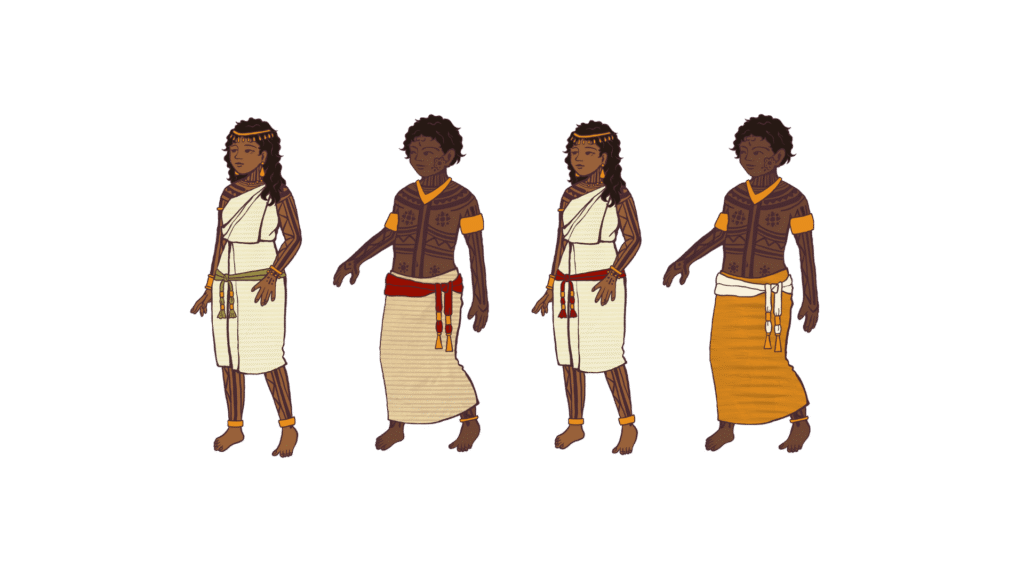
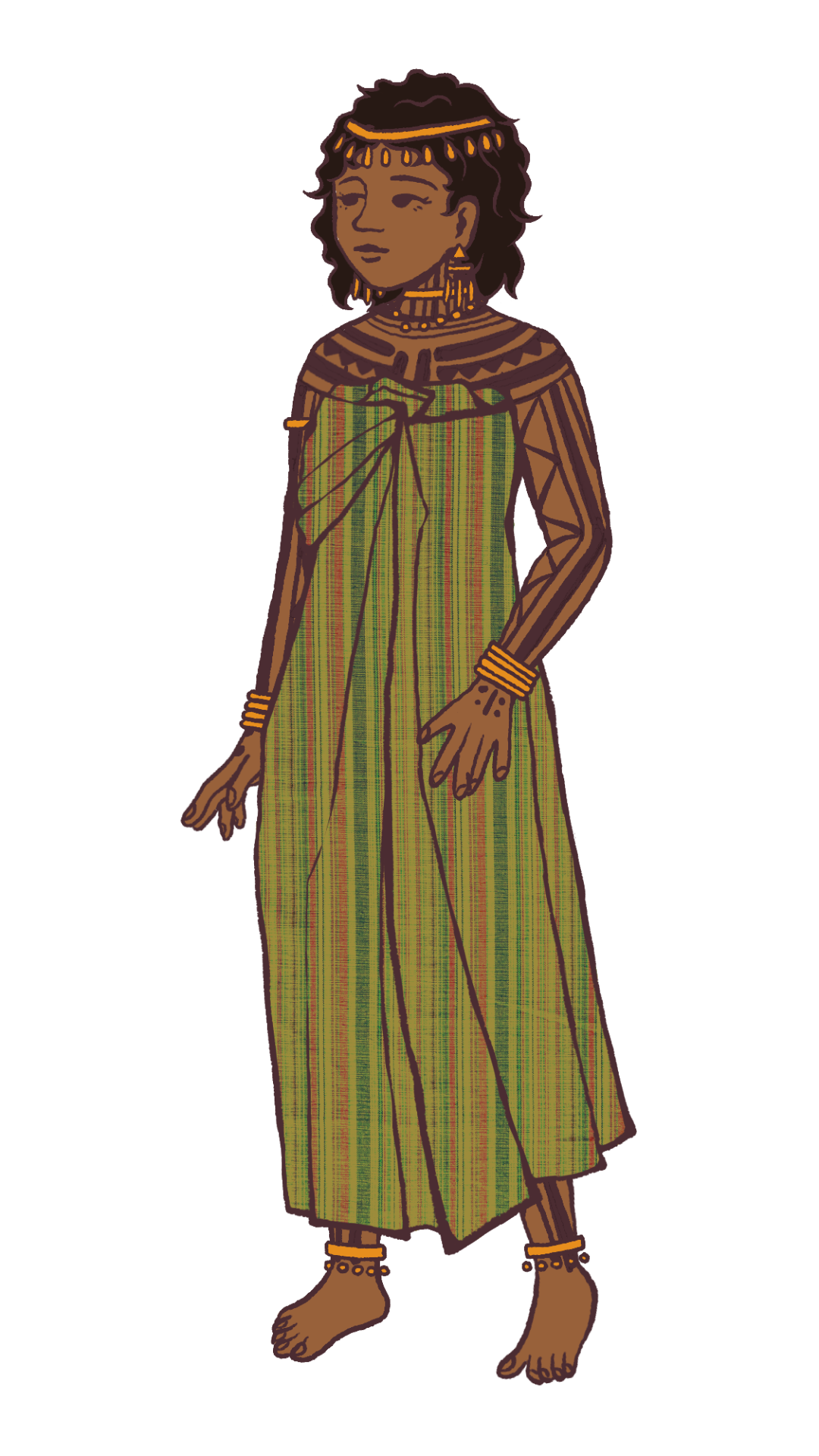
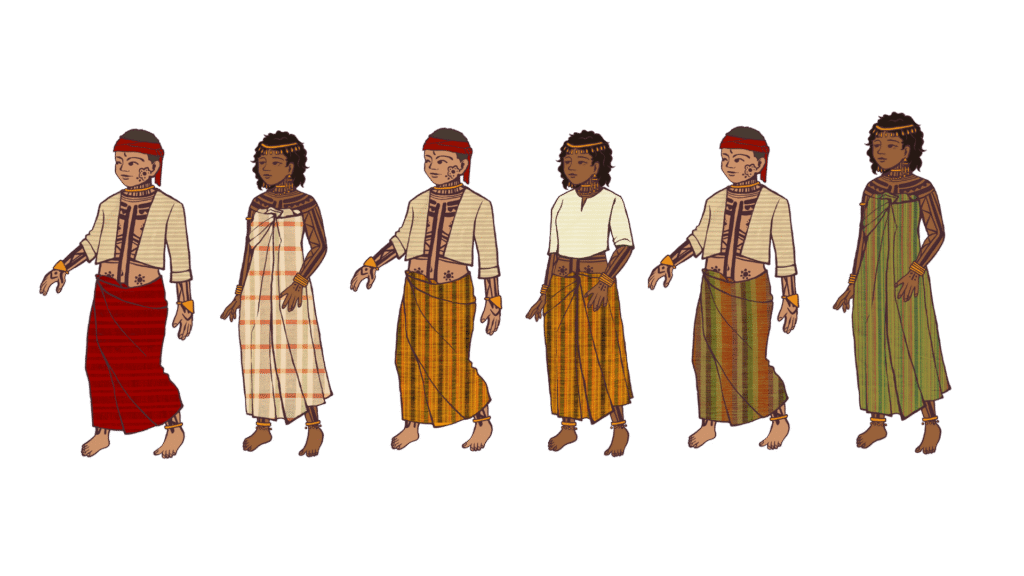
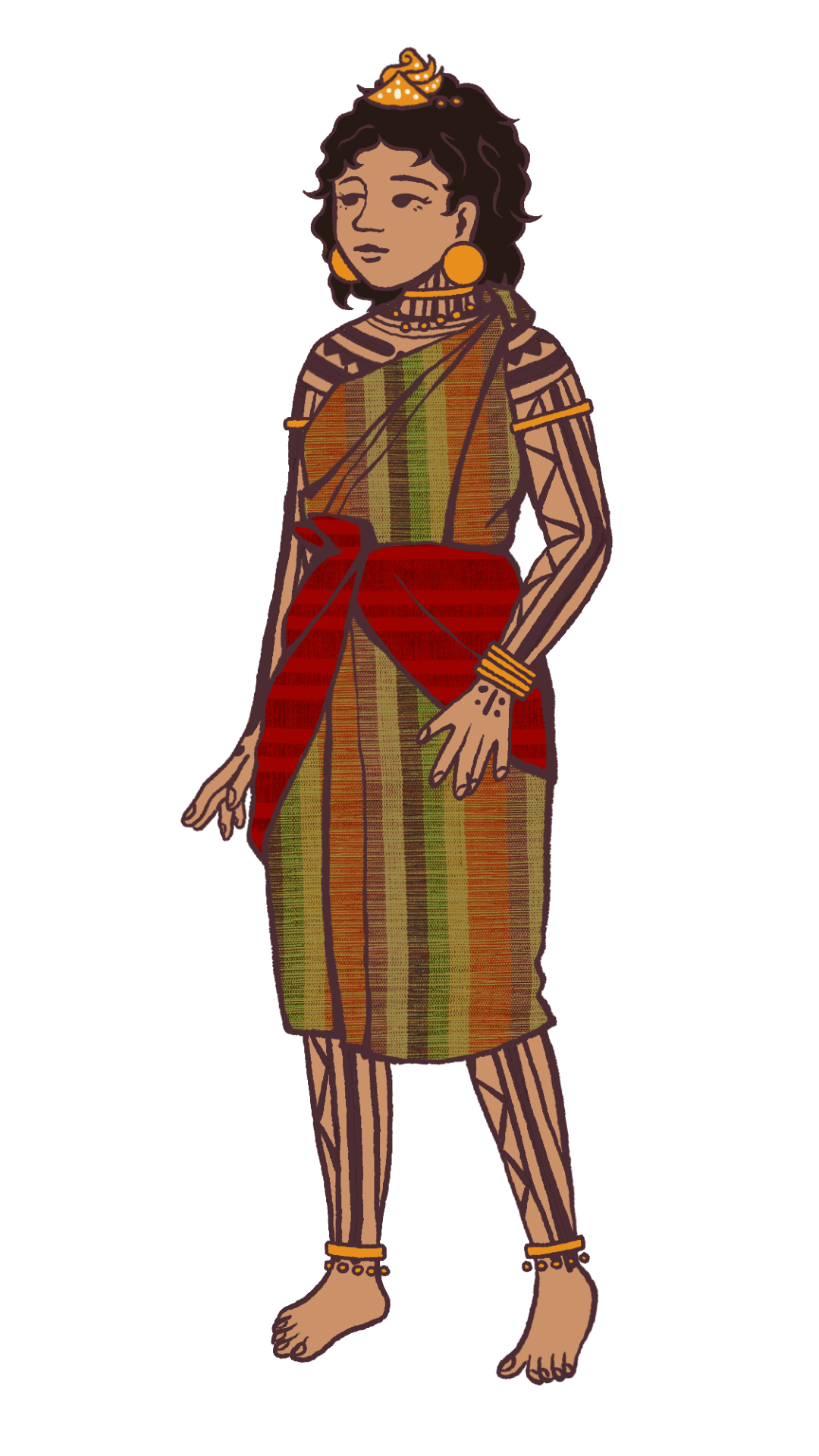
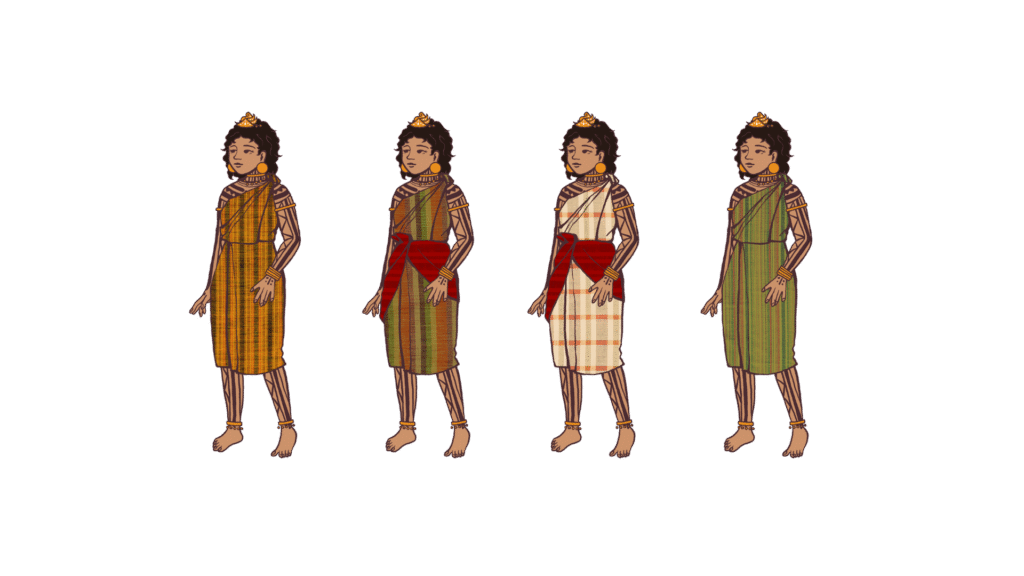
PATADYONG
Patadyong
Female & Male
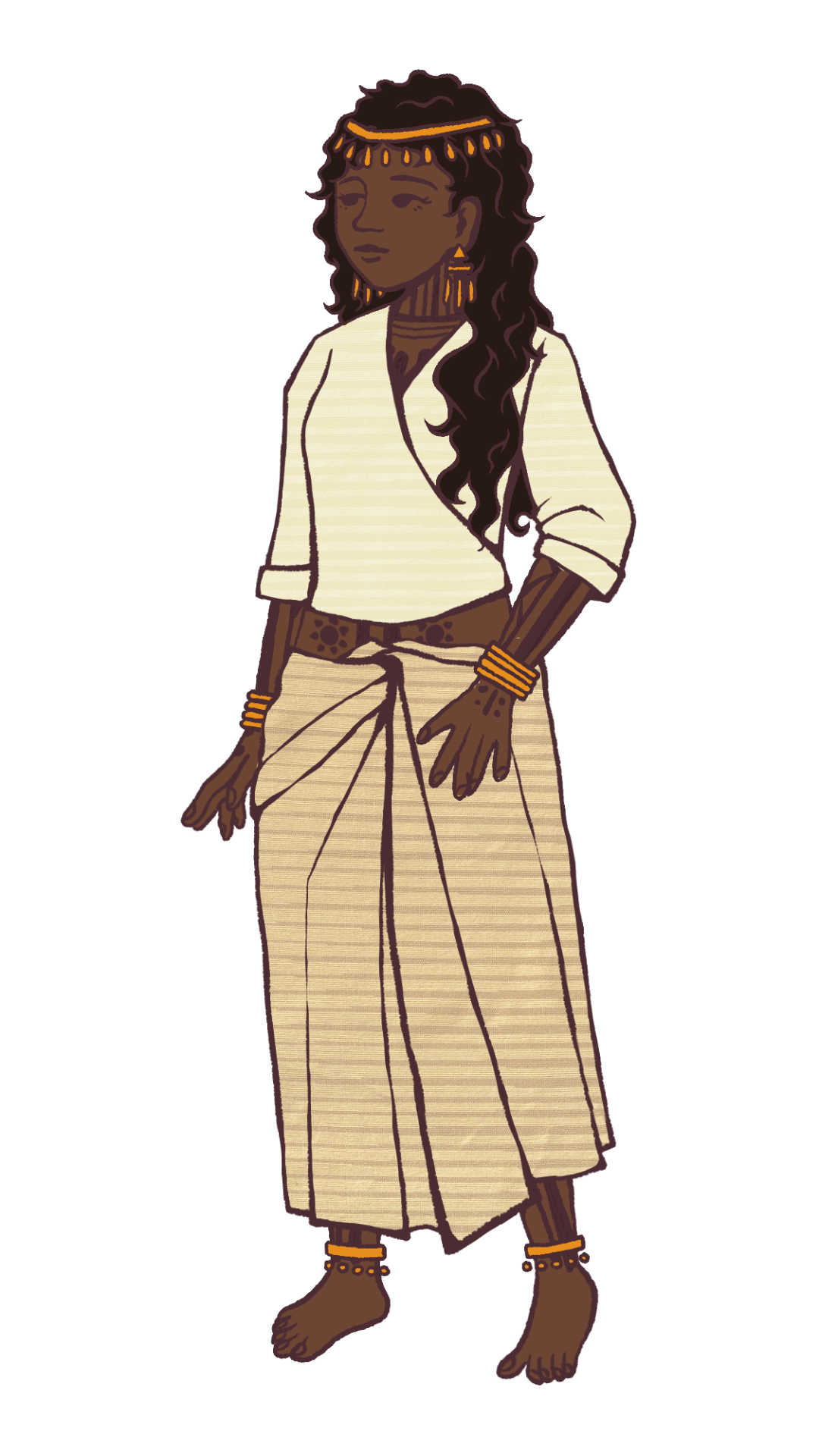
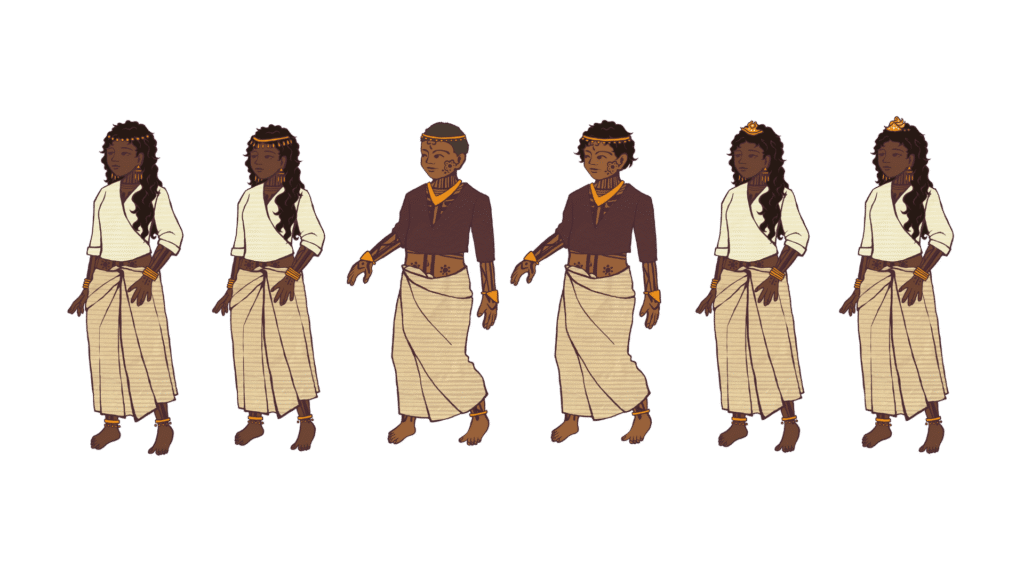
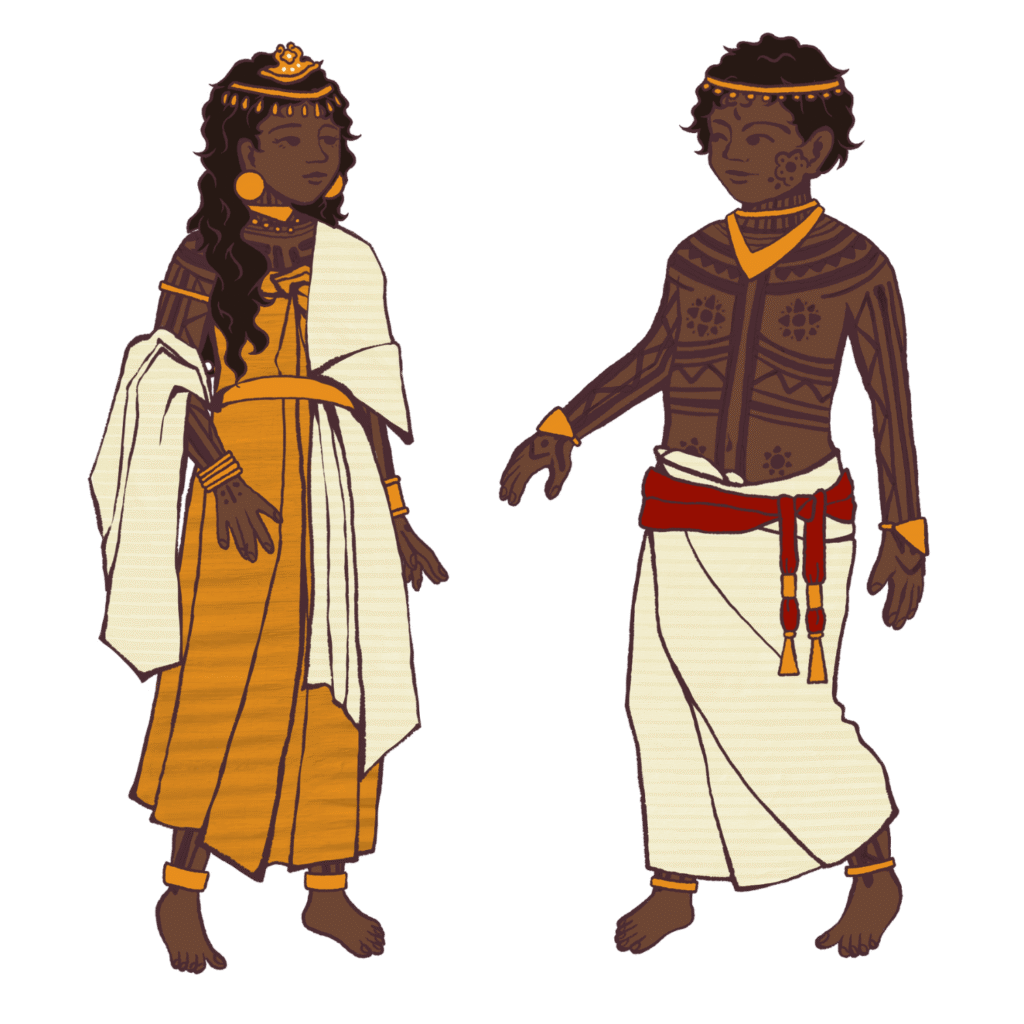
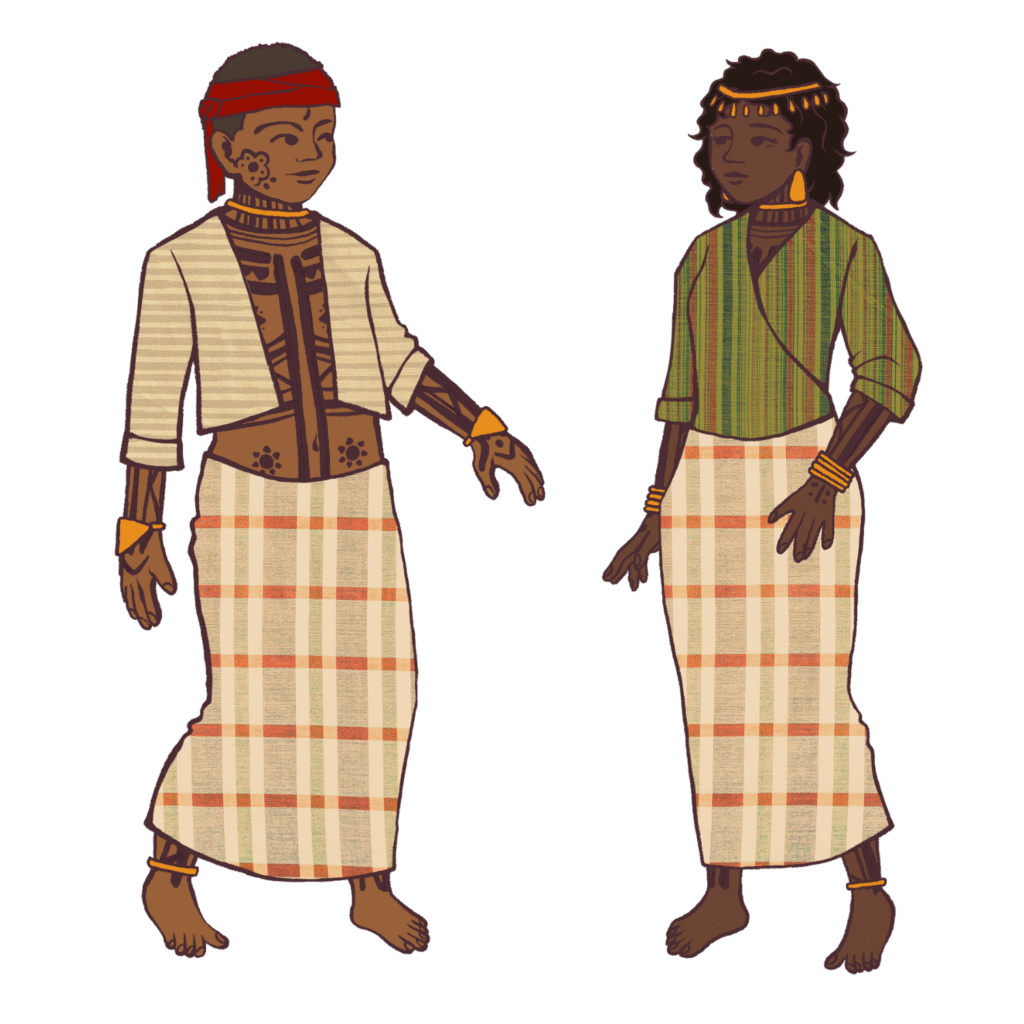
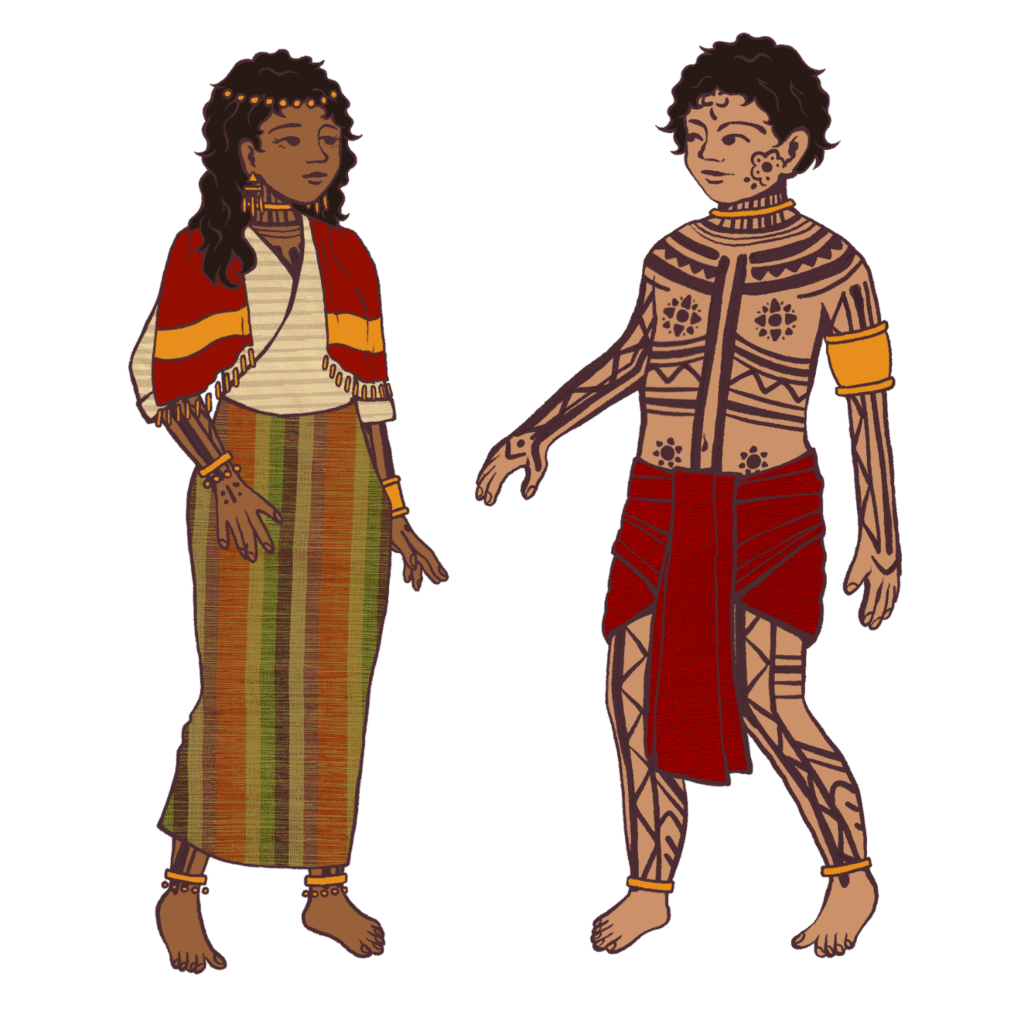
A rectangular or tubular wrap, usually striped or checked, worn as a skirt or multipurpose cloth.
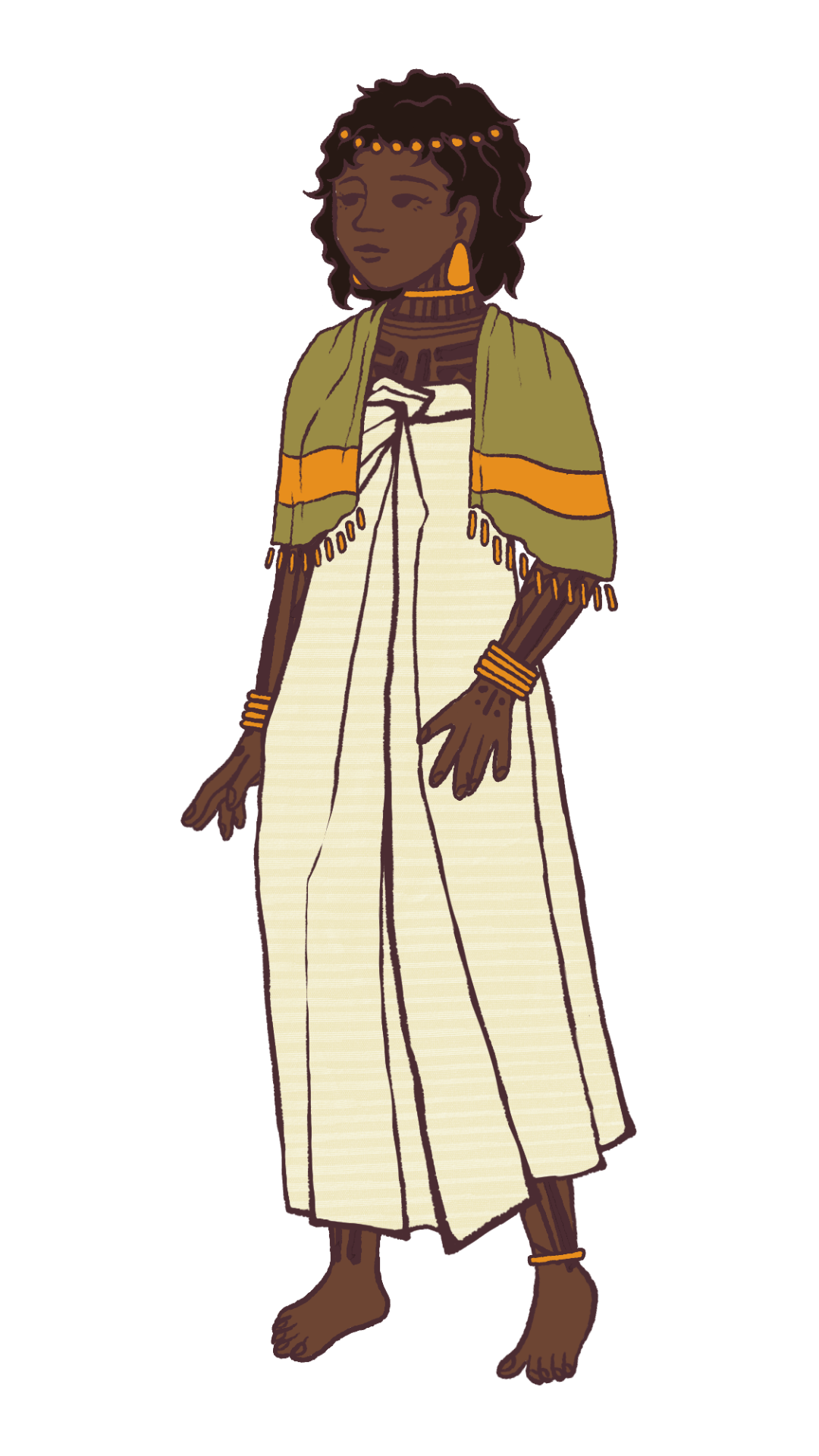
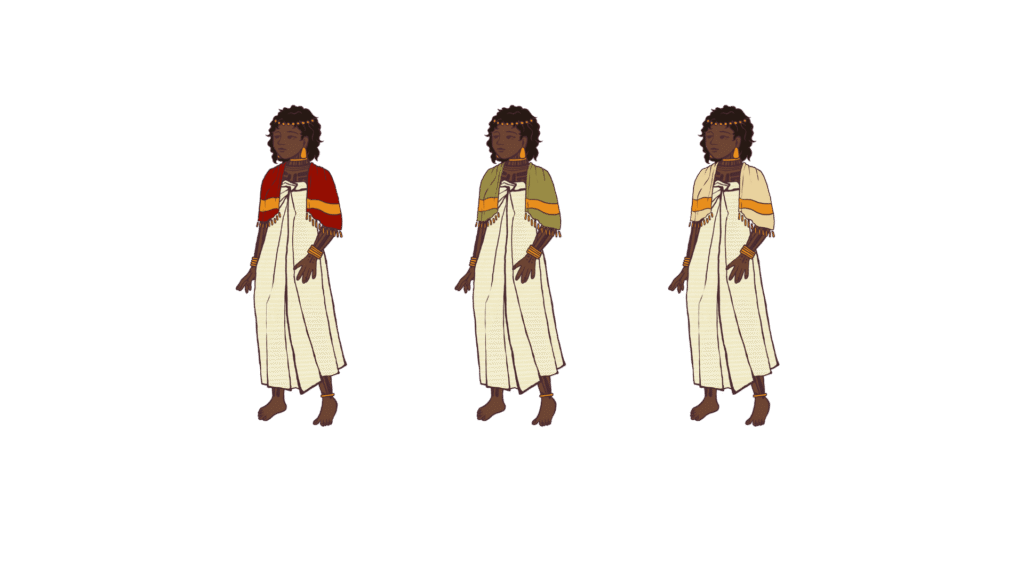
Alampay
Female
A shoulder wrap or head scarf used for modesty or shade.
ALAMPAY
Hulun
Female & Male
A narrow waist or shoulder cloth used as a belt, sash, or small wrap.
HULUN
Lihin-lihin
Female
A strip of cloth used as a modesty wrap or small sash over the hips or chest worn on formal occasions.
LIHIN-LIHIN
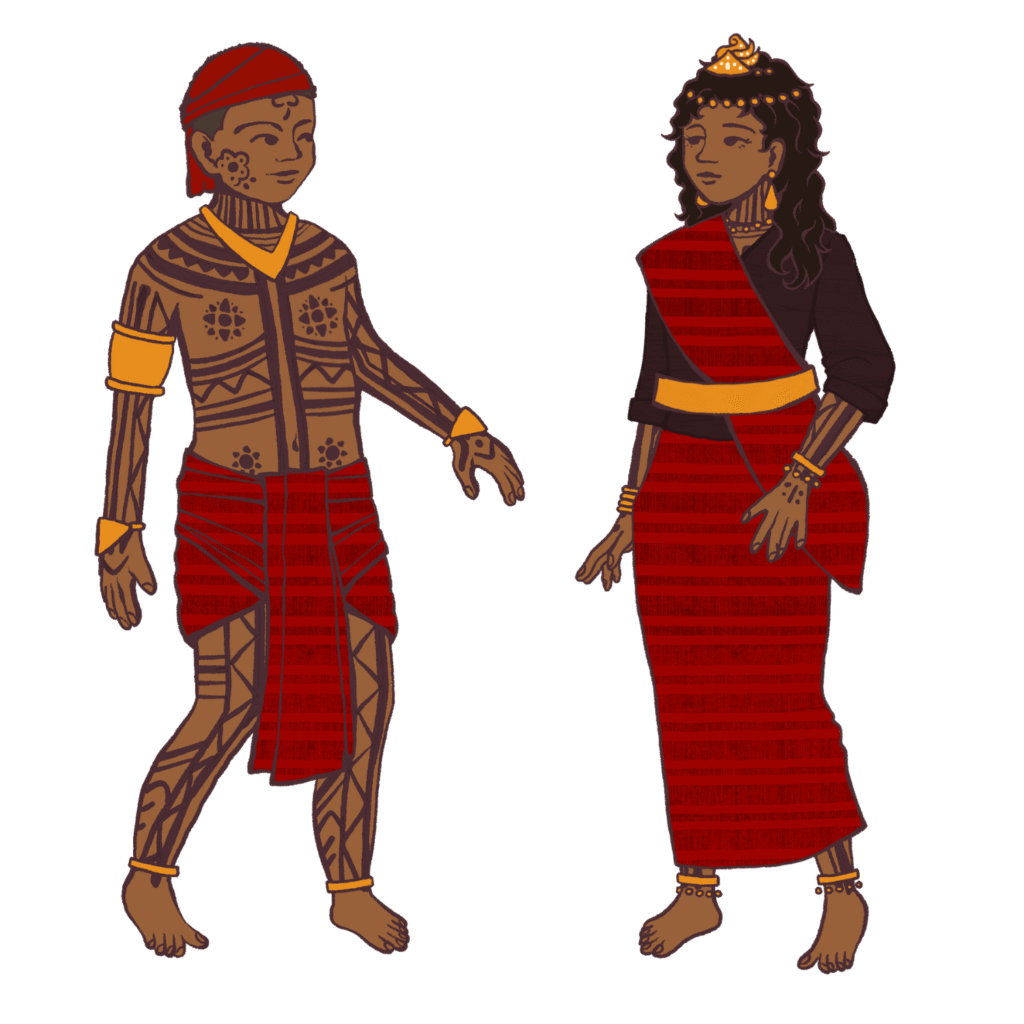
Pudong (Magalong)
Male
A turban or headcloth that indicated a man’s social status and accomplishments, particularly for warriors.
PUDONG
Pandong
Female & Male
A headband or small head covering used to hold hair or as simple adornment.
PANDONG
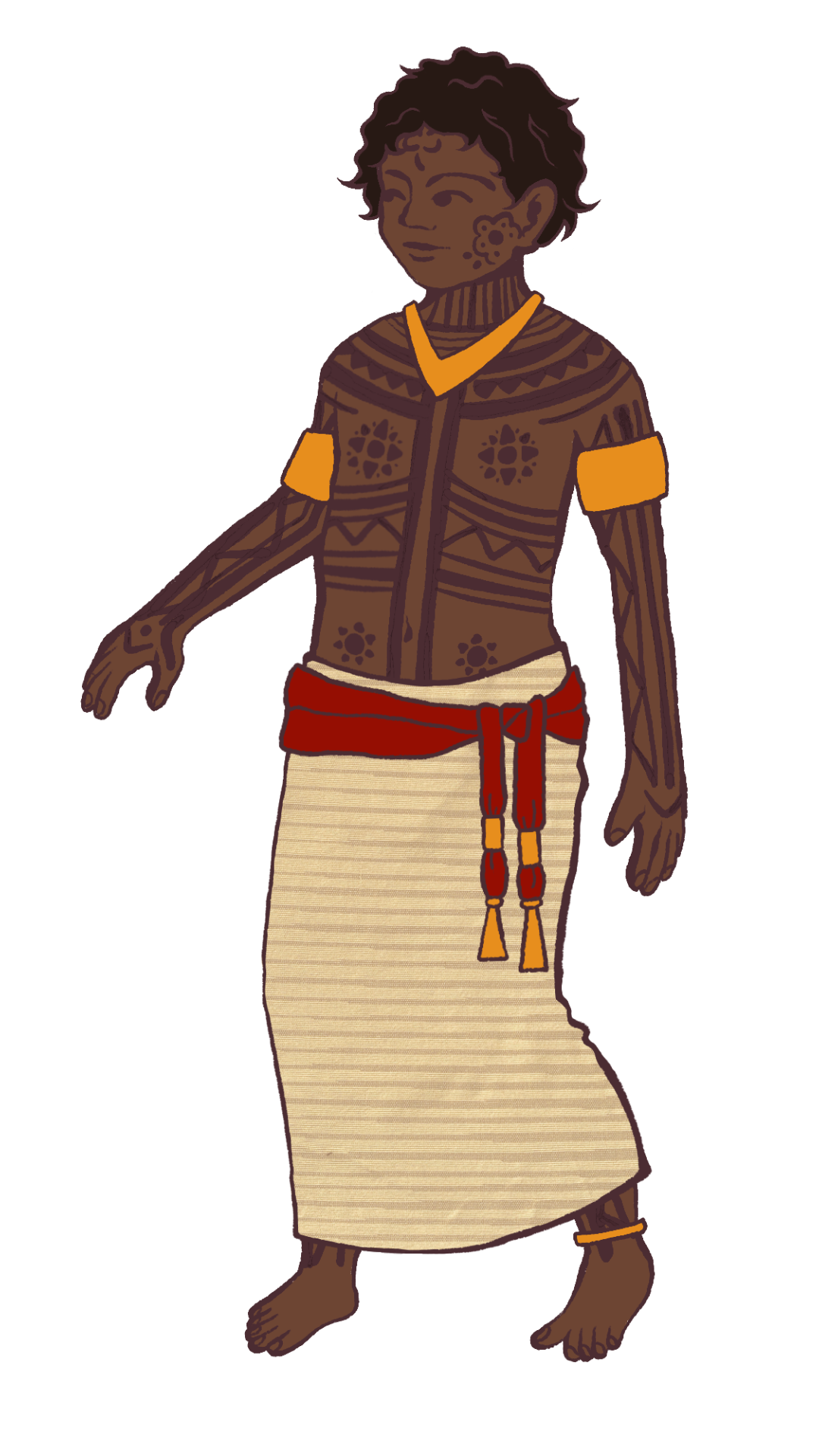
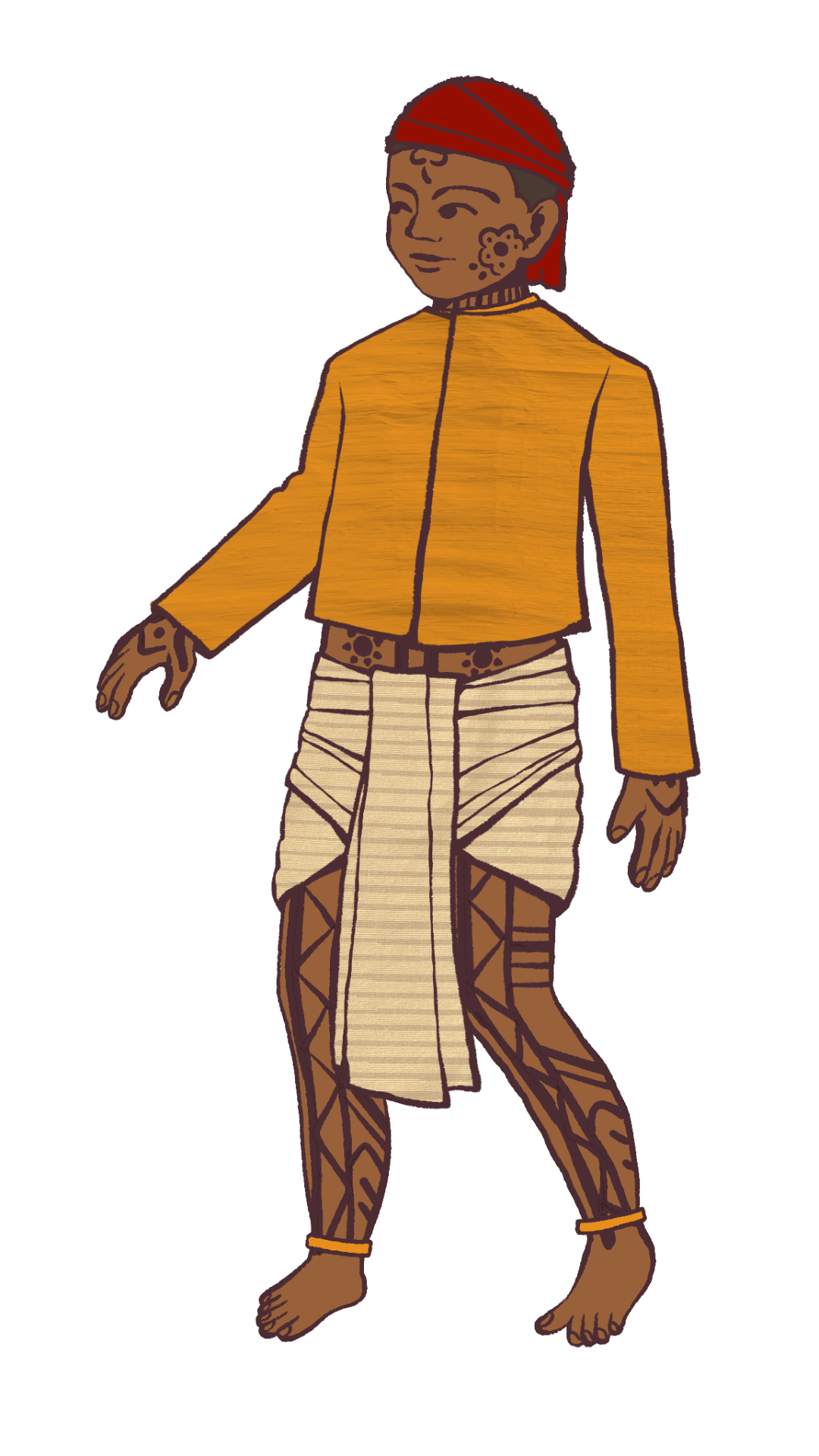
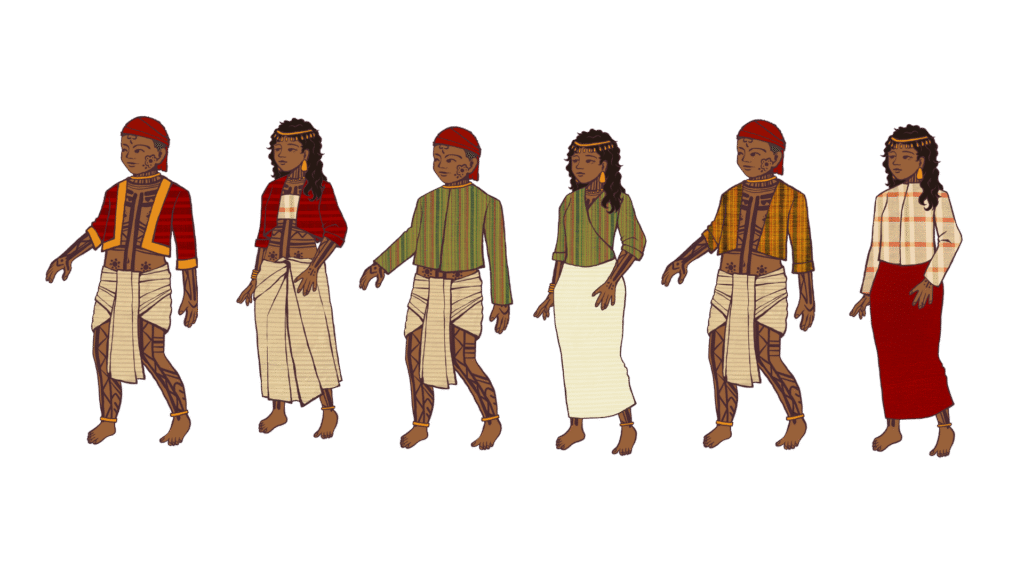
Bahag
Male
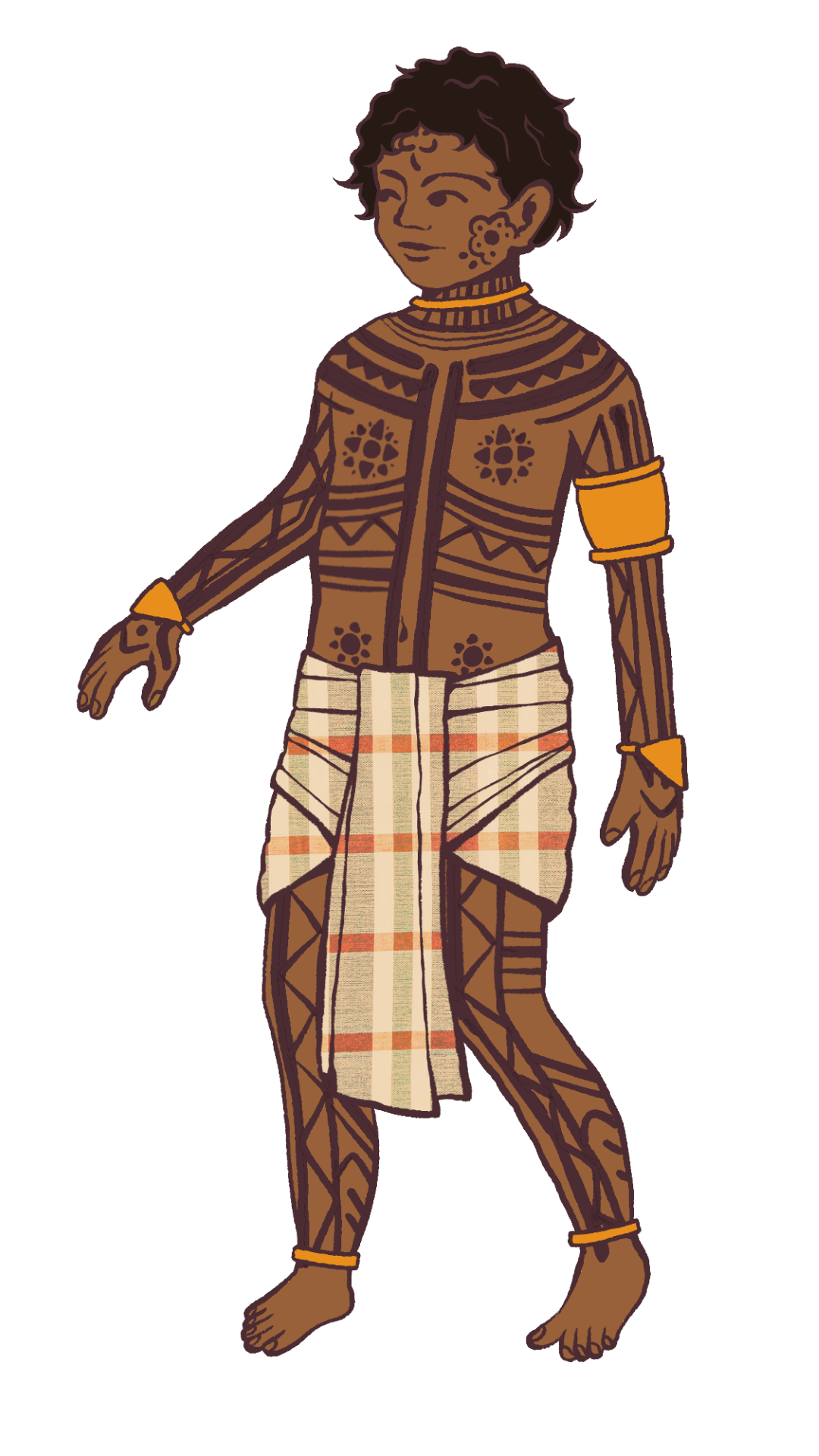
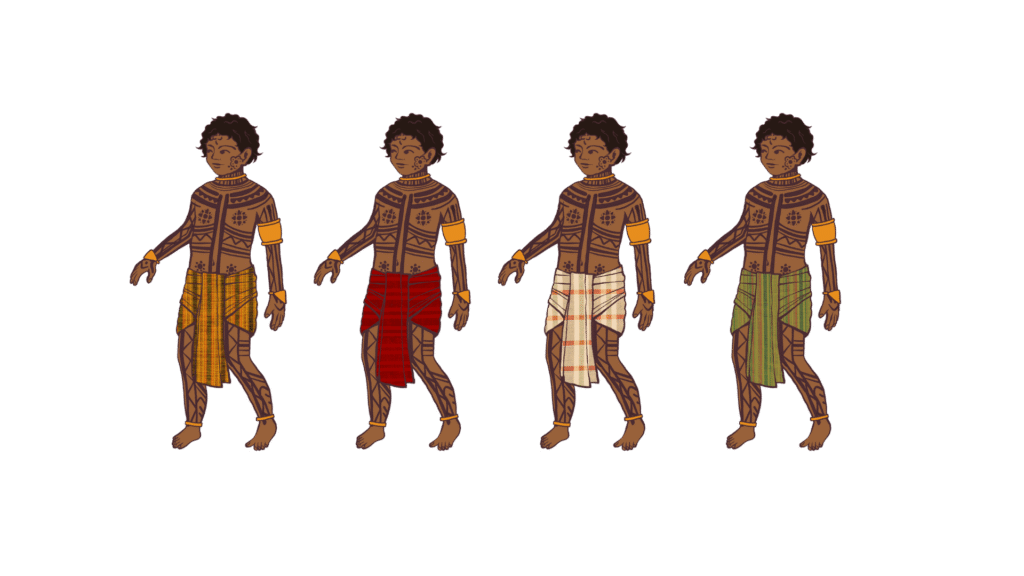
A simple loincloth folded and tied at the waist, worn for mobility and daily work.
BAHAG
Malong
Female & Male
A rectangular wrap used as a skirt, dress, or blanket wrapped and tied around the body.
MALONG
Sinina (Baru)
Female & Male
A short cotton tunic often paired with a skirt or tapis.
SININA
Tapis (Lambong)
Female
An overskirt wrapped and tied at the waist secured with a sash.
TAPIS
A trader journeyed across Western Visayas. In Panay, he heard tales of legendary heroes and saw nobles in intricately woven patadyong, while women wore finely crafted wraps. In Iloilo, garments featured rich red and black geometric designs, with nobles donning bahag or patadyong embroidered in gold to show prestige. His final stop, Antique, was marked by animist rituals and simpler attire decorated with beadwork and natural dyes, reflecting deep-rooted tradition.
After completing his journey in Western Visayas, the trader arrived in Central Visayas. His first stop was Cebu, a bustling pre-colonial port linked to Islamic traders, where locals wore silk and imported fabrics adorned with fine gold jewelry, symbols of wealth and cultural exchange. In Bohol, garments were made from abaca for comfort and function, embellished with shells and beads to signify social rank.
The trader has come across many different cultures, which followed his journey to Eastern Visayas. After travelling its scenic landscapes, he reached his first destination, Leyte. The locals practiced animism and wore abaca textiles, with patadyong featuring checkered patterns that reflected both practicality and artistry. In Samar, garments were made for comfort and movement, while tattoos stood out as “wearable clothing,” symbolizing valor, status, and achievements in battle.

It was a long journey, but he had reached his first destination, Western Negros. The trader noticed its cultural connection to Panay through the striped-patterned patadyong skirts of women. He also noticed that the locals would dye the men’s bahag in deep red hues. In awe, the trader saw how the locals took so much pride in their strength. The last and final destination was Eastern Negros. The locals have mentioned to him that this area was producing abaca, cotton, and silk textiles.
A trader journeyed across Western Visayas. In Panay, he heard tales of legendary heroes and saw nobles in intricately woven patadyong, while women wore finely crafted wraps. In Iloilo, garments featured rich red and black geometric designs, with nobles donning bahag or patadyong embroidered in gold to show prestige. His final stop, Antique, was marked by animist rituals and simpler attire decorated with beadwork and natural dyes, reflecting deep-rooted tradition.
After completing his journey in Western Visayas, the trader arrived in Central Visayas. His first stop was Cebu, a bustling pre-colonial port linked to Islamic traders, where locals wore silk and imported fabrics adorned with fine gold jewelry, symbols of wealth and cultural exchange. In Bohol, garments were made from abaca for comfort and function, embellished with shells and beads to signify social rank.
The trader has come across many different cultures, which followed his journey to Eastern Visayas. After travelling its scenic landscapes, he reached his first destination, Leyte. The locals practiced animism and wore abaca textiles, with patadyong featuring checkered patterns that reflected both practicality and artistry. In Samar, garments were made for comfort and movement, while tattoos stood out as “wearable clothing,” symbolizing valor, status, and achievements in battle.
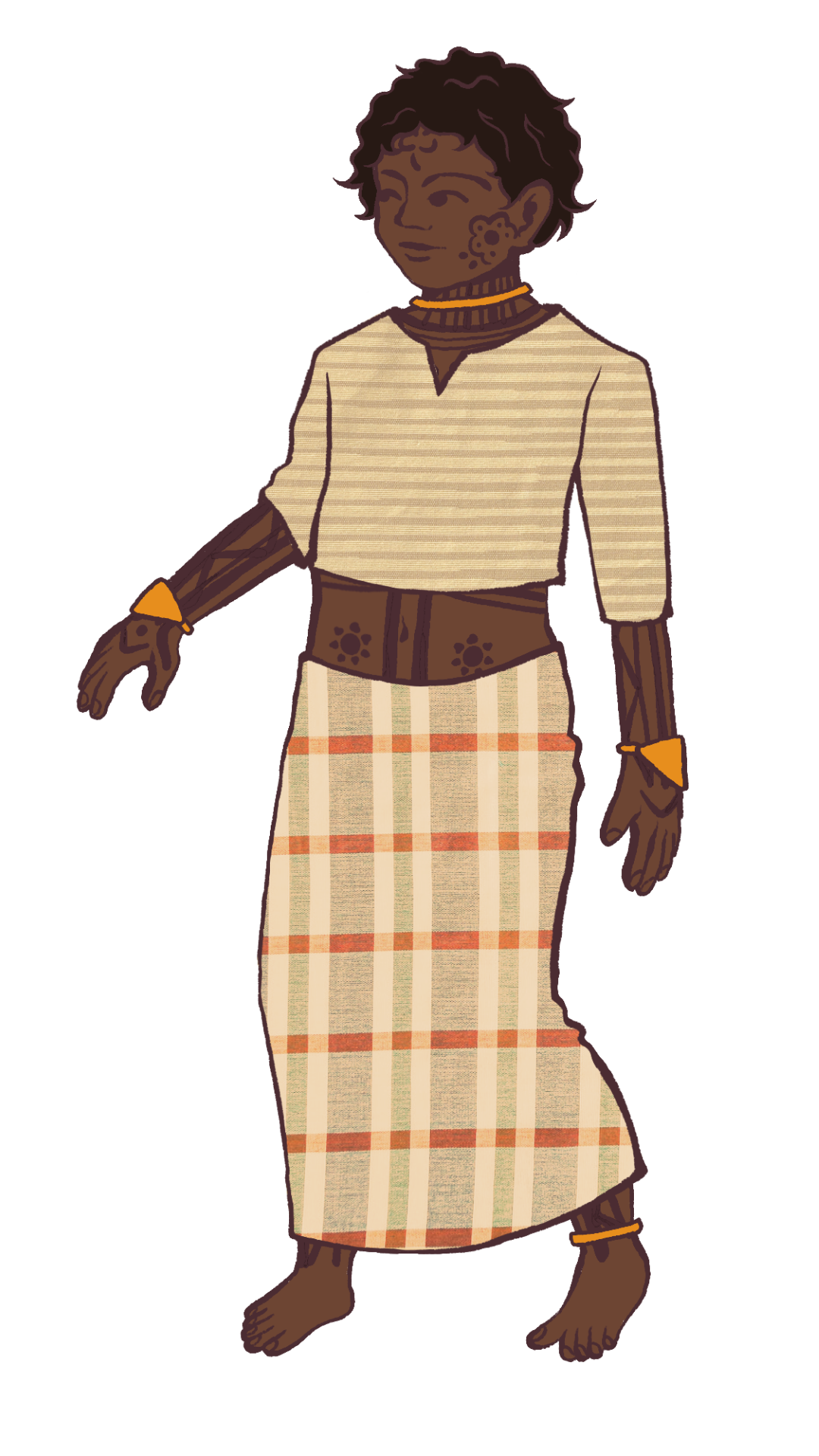
It was a long journey, but he had reached his first destination, Western Negros. The trader noticed its cultural connection to Panay through the striped-patterned patadyong skirts of women. He also noticed that the locals would dye the men’s bahag in deep red hues. In awe, the trader saw how the locals took so much pride in their strength. The last and final destination was Eastern Negros. The locals have mentioned to him that this area was producing abaca, cotton, and silk textiles.
A trader journeyed across Western Visayas. In Panay, he heard tales of legendary heroes and saw nobles in intricately woven patadyong, while women wore finely crafted wraps. In Iloilo, garments featured rich red and black geometric designs, with nobles donning bahag or patadyong embroidered in gold to show prestige. His final stop, Antique, was marked by animist rituals and simpler attire decorated with beadwork and natural dyes, reflecting deep-rooted tradition.
After completing his journey in Western Visayas, the trader arrived in Central Visayas. His first stop was Cebu, a bustling pre-colonial port linked to Islamic traders, where locals wore silk and imported fabrics adorned with fine gold jewelry, symbols of wealth and cultural exchange. In Bohol, garments were made from abaca for comfort and function, embellished with shells and beads to signify social rank.
The trader has come across many different cultures, which followed his journey to Eastern Visayas. After travelling its scenic landscapes, he reached his first destination, Leyte. The locals practiced animism and wore abaca textiles, with patadyong featuring checkered patterns that reflected both practicality and artistry. In Samar, garments were made for comfort and movement, while tattoos stood out as “wearable clothing,” symbolizing valor, status, and achievements in battle.
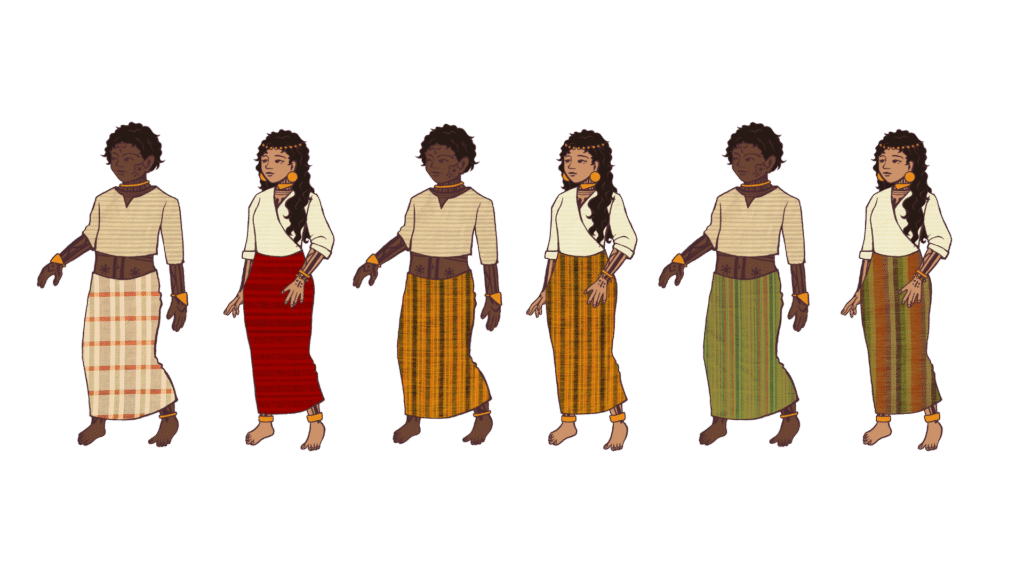
It was a long journey, but he had reached his first destination, Western Negros. The trader noticed its cultural connection to Panay through the striped-patterned patadyong skirts of women. He also noticed that the locals would dye the men’s bahag in deep red hues. In awe, the trader saw how the locals took so much pride in their strength. The last and final destination was Eastern Negros. The locals have mentioned to him that this area was producing abaca, cotton, and silk textiles.
The first traveller sailed into the Visayan harbours at dawn, trading beads, metal tools, and stories. He noted garments like a merchant’s record weight, men in cotton and abaca waistcloths, women in simple skirts and wraps with knotted sashes. When Spanish ships arrived with cloth, buttons, and stitched garments, he witnessed uneasy exchanges with missionaries urging modesty, blending tradition with gradual change.

The next trader travelled inland between townships and coastal trading posts, where he found hybrid fashions along the coast: Chinese silks from Manila galleons mixed with Spanish-inspired silhouettes. Some prized Chinese brocades for status, while others favored the modest styles encouraged by priests reflecting centuries of cultural blending between Eastern trade and Western influence.

The steamships shortened routes and towns broadened, the third traveler witnessed shifting fashions. In the barrios, people kept tradition through handwoven skirts, simple blouses, and embroidered head coverings. In urban centers, women wore tailored blouses and skirts influenced by Spanish and American styles. Field workers dressed for practicality, while urban women used fashion to express class, education, and modernity.
The fourth trader records wartime austerity followed by postwar reinvention. Two generations expressed identity through dress: elder and rural women kept to wrap skirts, embroidered tunics, and modest coverings, while younger, urban women embraced modern cuts from American influence. Couturiers and seamstresses reimagined traditional styles into modern garments, blending memory with progress.
The final traveller sees a clear social split. At elite gatherings, he observed formalized, stylized versions of traditional dress: exaggerated silhouettes, glossy fabrics, and curated heritage motifs displayed as national couture. In the streets and provincial fairs, he saw lively, vernacular fashion: colourful fusion and practical reinterpretations of former garments for everyday life. The trader closes his ledger, noting the paradox of the era: one of reclamation and refinement, and the other of living adaptation that kept tradition wearable and relevant.