
EXPERIENCE
Explore the pages of the past and experience the beauty of pre-colonial Visayan garments through our partners.
DESIGN YOUR OWN AVATAR
Mix, match, and visualize your own pre-colonial Visayan avatar. Select textiles, garments, and accessories, then combine them in a way that represents you!
Which pieces did you mix and match? Share your favorite combos and cultural discoveries below!
Dress, Discover, Discuss!
MUSEUMS AND EXHIBITS
Find the fibers of pre-colonial Visayan clothing.
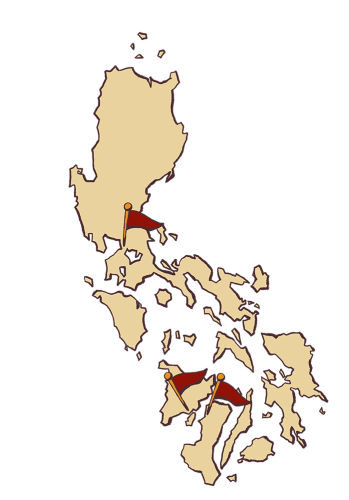
View traces of what remains and paintings depicting what once was at different museums and exhibits in Luzon and Visayas.
Hover over each museum card to discover its featured exhibits.
When you’re ready to visit, click “Get Directions” to find your way there.
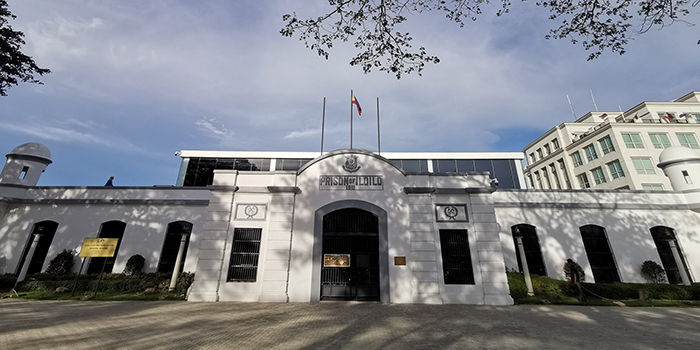
NATIONAL MUSEUM OF THE PHILIPPINES - ILOILO
ABonifacio Dr, Iloilo City Proper, Iloilo City, Iloilo
Photo from National Museum of the Philippines Iloilo
Dumáan nga Pagpangabúhì sa Panay: Subsistence, Trade, and Funerary Practices
A showcase of tools used in the daily life of pre-colonial Visayans. These artifacts were made from the natural materials—in the clay and shell accessories, and the gold in the death mask.
Habol Panay: The Woven Artistry of Western Visayas
An exhibit tracing back the habol and textile industry of Panay island, from the natural fibers used to the first recorded Visayan garments. It focuses on how the industry evolved, fell, and rose again.
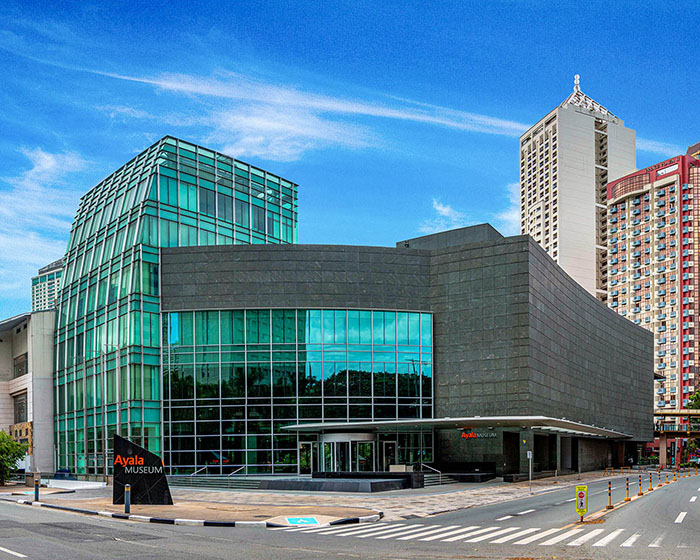
AYALA MUSEUM
Makati Avenue, corner Dela Rosa Street, Ayala Center, Makati City, 1229 Metro Manila
Photo From Ayala Museum
Gold of Ancestors: Pre-colonial Treasures in the Philippines
A large collection of gold objects and accessories—necklaces, earrings, waistbands, and ceremonial items like the death mask. All of these detail the significance of gold during the period.
Skeins of Knowledge, Threads of Wisdom
The exhibit highlights the symbolic, spiritual, and communal roles of weaving in local textile traditions, noting the shared aesthetics, materials, and tools found across regions.
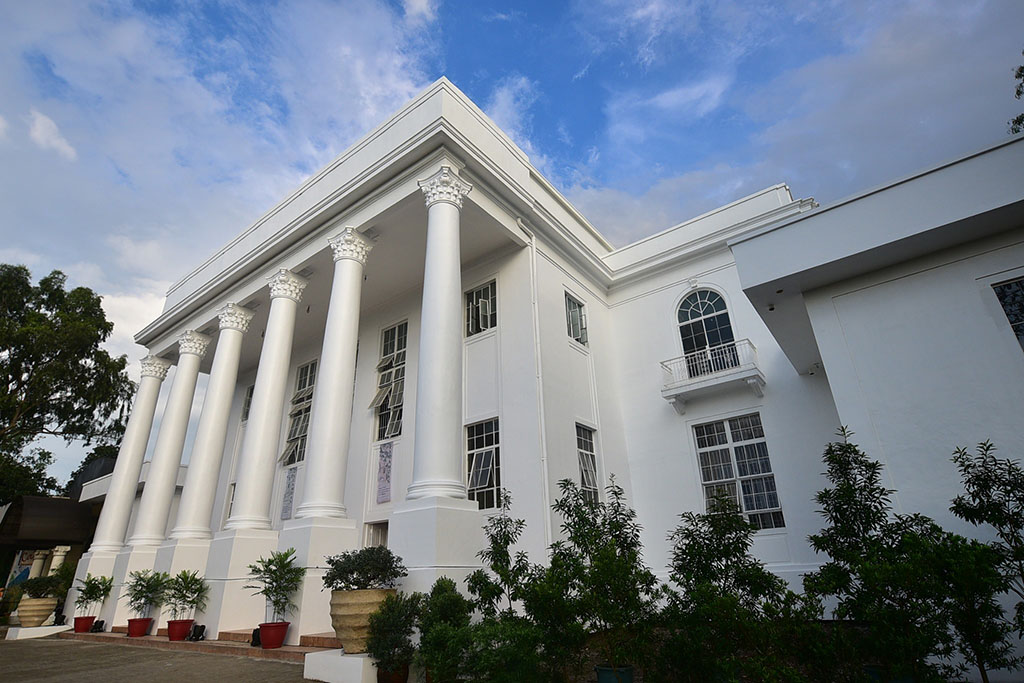
NEGROS MUSEUM
Gatuslao St, Bacolod, 6100 Negros Occidental
Photo from Negros Museum
Pre-Spanish Negros
A series of paintings depicting pre-colonial natives of the then Buglas Island, focusing on traditions and livelihoods.
Talamdan
This exhibit on the sugarcane industry of Negros starts with a painting called “River Mouth Trading”, which features traders exchanging goods and gold.
MUSEUMS AND EXHIBITS
Find the fibers of pre-colonial Visayan clothing.
View traces of what remains and paintings depicting what once was at different museums and exhibits in Luzon and Visayas.
Hover over each museum card to discover its featured exhibits. When you’re ready to visit, click “Get Directions” to find your way there.
NATIONAL MUSEUM OF THE PHILIPPINES - ILOILO
ABonifacio Dr, Iloilo City Proper, Iloilo City, Iloilo
Photo from National Museum of the Philippines Iloilo
Dumáan nga Pagpangabúhì sa Panay: Subsistence, Trade, and Funerary Practices
A showcase of tools used in the daily life of pre-colonial Visayans. These artifacts were made from the natural materials—in the clay and shell accessories, and the gold in the death mask.
Habol Panay: The Woven Artistry of Western Visayas
An exhibit tracing back the habol and textile industry of Panay island, from the natural fibers used to the first recorded Visayan garments. It focuses on how the industry evolved, fell, and rose again.
NEGROS MUSEUM
Gatuslao St, Bacolod, 6100 Negros Occidental
Photo from Negros Museum
Pre-Spanish Negros
A series of paintings depicting pre-colonial natives of the then Buglas Island, focusing on traditions and livelihoods.
Talamdan
This exhibit on the sugarcane industry of Negros starts with a painting called “River Mouth Trading”, which features traders exchanging goods and gold.
AYALA MUSEUM
Makati Avenue, corner Dela Rosa Street, Ayala Center, Makati City, 1229 Metro Manila
Photo From Ayala Museum
Gold of Ancestors: Pre-colonial Treasures in the Philippines
A large collection of gold objects and accessories—necklaces, earrings, waistbands, and ceremonial items like the death mask. All of these detail the significance of gold during the period.
Skeins of Knowledge, Threads of Wisdom
The exhibit highlights the symbolic, spiritual, and communal roles of weaving in local textile traditions, noting the shared aesthetics, materials, and tools found across regions.
PARTNERS
Connect with our partners through their official Facebook platforms to explore their services, discover cultural offerings, and join workshops, events, and educational initiatives that celebrate pre-colonial Visayan heritage.
DIYANDI NI WAWA
Dasigan Street, Poblacion 6531 Kananga, Leyte, Philippines
A costume rental service specializing in pre-colonial Visayan clothing, offering a full service from hair to garments to accessories. They also create pre-colonial jewelry, replicated and inspired by artifacts, for sale and custom orders.
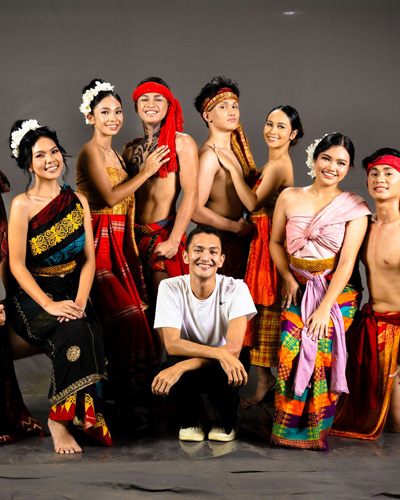
Photo by Diyandi Ni Wawa
Photo by Karakoa Productions
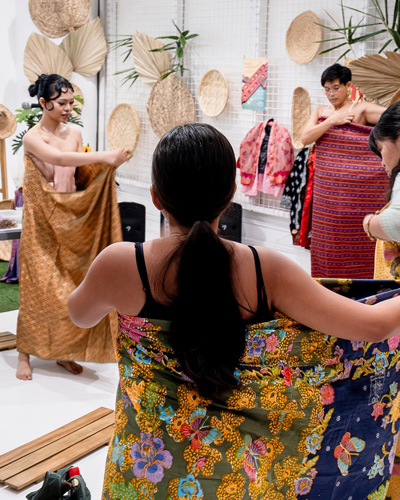
KARAKOA PRODUCTIONS
Cebu City, Philippines
A collective dedicated to educating Filipinos on the richness of pre-colonial Visayan history through performance, research, and cultural storytelling. They host workshops in events and pop-ups around Cebu, in addition to online lectures on their specialties.
TEXTILE RETAILERS
Browse a curated selection of locally made textiles through our partner retailers. Visit their online platforms to shop, inquire about custom or bulk orders, and stay updated on new collections.

A Negros-based social enterprise supporting handloom weaving communities through the sales of their textiles, yarns, scarves, and homegoods. They continue to search and introduce new materials and production techniques in collaboration with the Department of Science and Technology.

The Alternative Nest and Trading/Training Hub for Indigenous or Ingenious Little Livelihood seekers (ANTHILL) works closely with weaving community across the Philippines, offering textiles by the yard classified into Luzon, Visayas, and Minadano weaves, in addition to other adjacent products.

A design and sustainability studio retailing ready-to-wear collections in collaboration with indigenous weavers, garment workers, and NGOs. They also partner with these sectors in offering wholesale textile and garment production.
WEAVERS
Engage directly with weaving communities by reaching out through their Facebook pages. Support their craft by purchasing handwoven textiles and learning more about the traditions behind each weave.
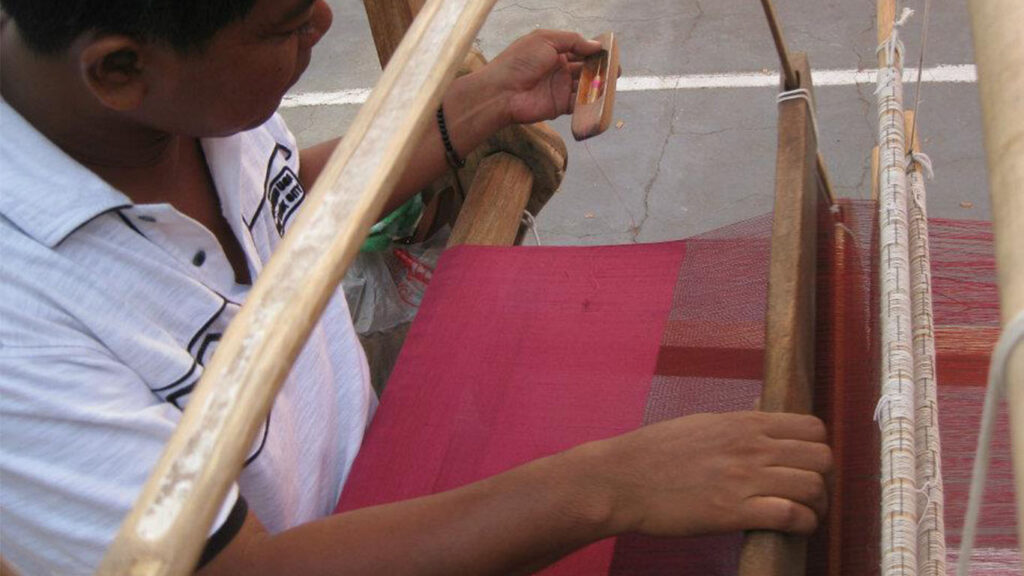
Photo by Bagtason Loomweavers Association
Bagtason Loomweavers Association (BLWA)
Bagtason, Bugasong, Antique
A community-driven enterprise producing high-quality handwoven textiles rooted in the province’s rich weaving heritage. BLWA artisans transform these traditional fabrics into shawls, scarves, leis, wallets, hats, bags, and table runners, with customizable designs and colors to suit every preference. Reviving a craft that dates back to pre-Hispanic times, BLWA was established with support from the Department of Trade and Industry to empower local residents to create and market their own products. Under the leadership of Mario Manzano, BLWA continues to preserve Antique’s weaving traditions while innovating for modern lifestyles.
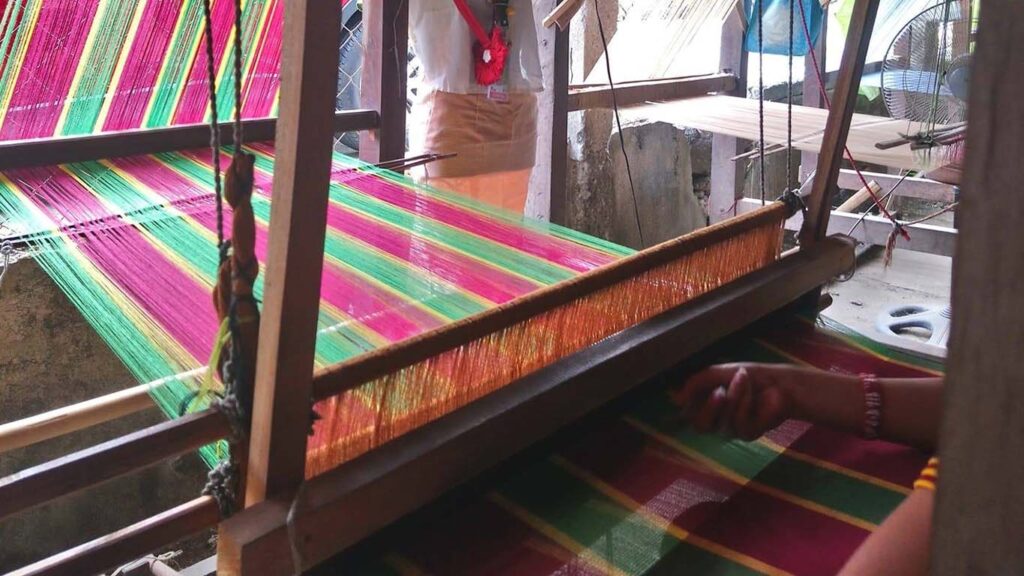
Photo by Indag-an Primary Multipurpose Cooperative
Indag-an Primary Multipurpose Cooperative (IPMPC)
Brgy. Indag-an, Miagao, Iloilo
Driven by the vision of a thriving hablon weaving industry in Miagao, Iloilo, the Indag-an Primary Multi-Purpose Cooperative (IPMPC) works to sustain and revive this centuries-old craft. With support from national agencies and the Canadian International Development Assistance, local weavers received looms and training that enabled them to continue producing high-quality hablon textiles. Today, IPMPC creates patadyong, shawls, and even sandals—preserving Miagao’s weaving heritage while adapting to modern needs.
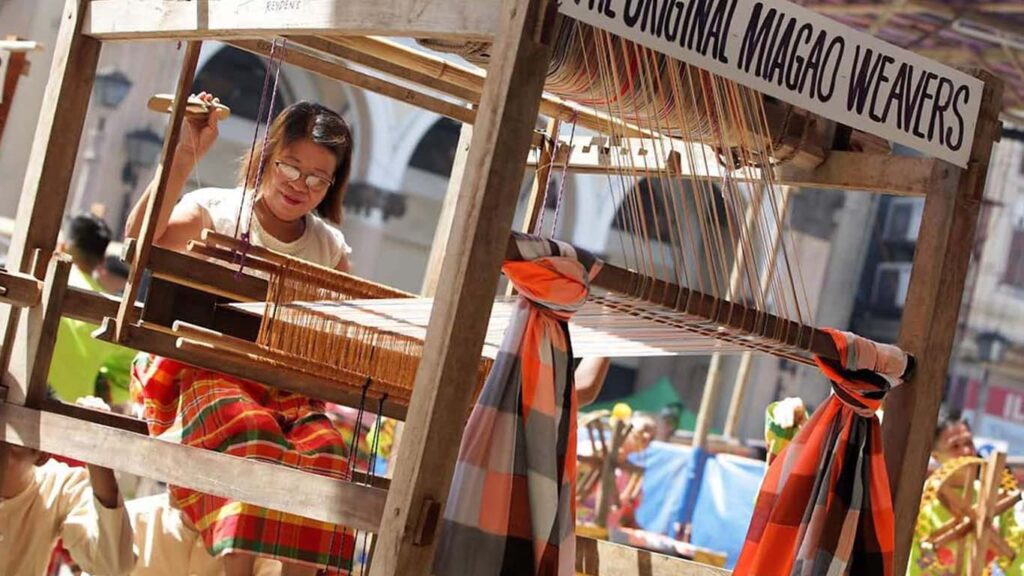
Photo by Reyden’s Hablon
Reyden’s Hablon
Miagao, Iloilo
A living testament to Iloilo’s weaving heritage, Reyden’s Hablon celebrates the artistry of traditional hablon textiles by sustaining ancestral techniques, highlighting the resilience of Visayan culture, and reimagining handwoven patterns into contemporary designs that connect local craftsmanship with modern creative expression.
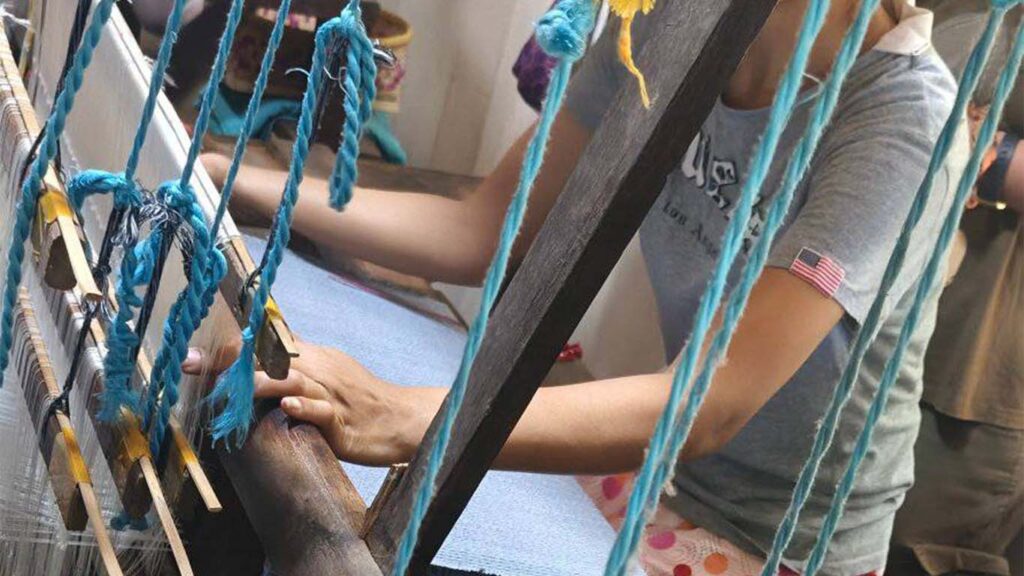
Photo by Negros Nine Weaving Association
Negros Nine Weaving Association
Sitio Bantolinao, Barangay Tan-awan, Kabankalan City, Negros Occidental
A small but highly skilled community producing artisanal textiles at the Negros Nine Weaving Center. Established in 2012 as a livelihood initiative with the support of Fr. Brian Gore and local government agencies, the group later partnered with Creative Definitions in 2017 to strengthen product development, marketing, and sustainability. Known for their craftsmanship in weaving hablon and sablay, the cooperative provides steady income for families in Kabankalan’s remote mountains while also funding local education and feeding programs. With each handwoven textile, the Negros 9 Weavers preserve tradition, empower livelihoods, and continue to expand the possibilities of Filipino weaving.
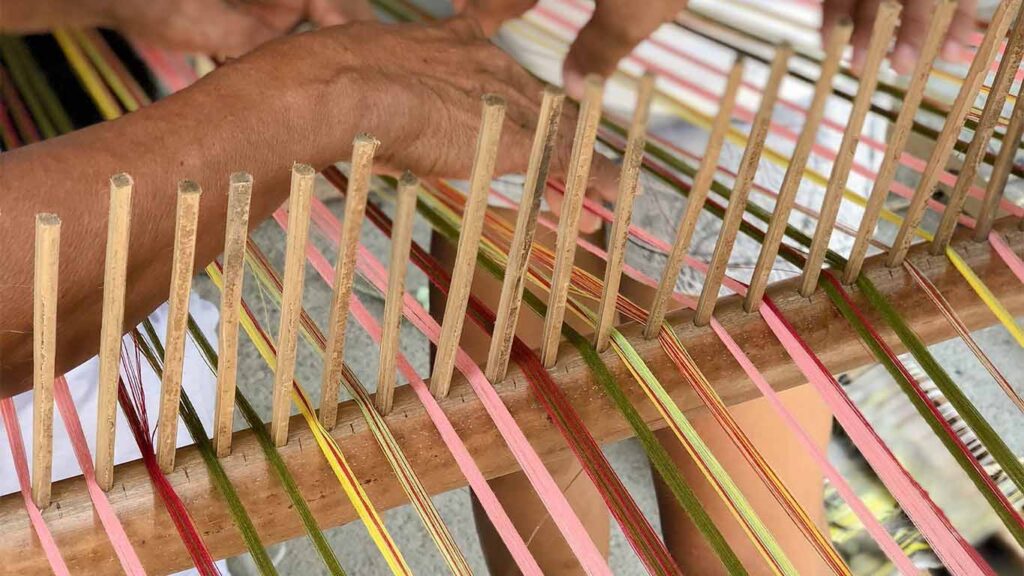
Photo by Hablon ni Lauriana
Hablon ni Lauriana
Argao, Cebu
Hablon ni Lauriana is a weaving community based in Argao, Cebu, known for its mastery of vertical handloom weaving. Originally starting with four weavers specializing in polyhemp and kinarnero weaves, the group has grown to 15 artisans since becoming ANTHILL’s direct partner in 2018. The community produces vibrant plaid, checkered, and striped hablon textiles while also serving as ANTHILL’s Center for Research and Textile Innovation. Here, weavers experiment with new techniques and create zero-waste fabrics upcycled from scraps, advancing circularity in fashion. In 2019, Hablon ni Lauriana was awarded Heartefino’s Grant Program, further strengthening its role as a hub for innovation and sustainability in Cebu’s weaving heritage.
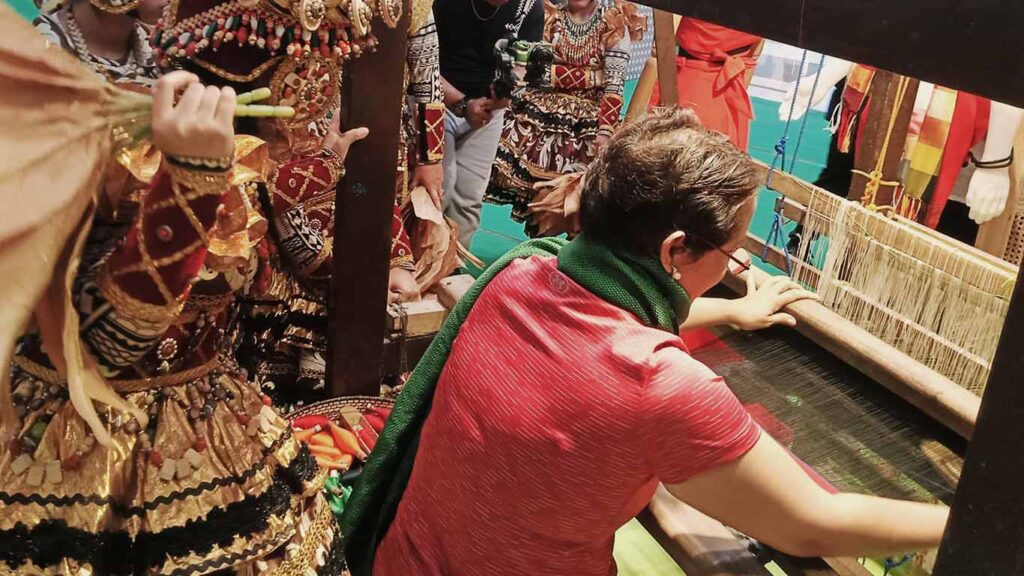
Photo by Hinablon sa Cebu Handwoven in Argao
Hinablon sa Cebu Handwoven in Argao
Argao, Cebu
Hinablon sa Cebu is a social enterprise born from a Cebu Technological University (CTU) community extension project, revitalizing the handloom weaving industry in Argao, Cebu. With support from CTU, the Department of Trade and Industry, and other partners, it empowers marginalized communities by providing sustainable livelihood opportunities, technical training, and access to essential resources. Hinablon sa Cebu blends tradition with innovation, producing handwoven textiles, fashion accessories, and home accents enhanced with hand printing and embroidery. Beyond economic development, the enterprise champions capacity building, product innovation, and circularity in fashion—making weaving both a cultural preservation effort and a driver of social impact.
WEAVERS
Engage directly with weaving communities by reaching out through their Facebook pages. Support their craft by purchasing handwoven textiles and learning more about the traditions behind each weave.
Photo by Bagtason Loomweavers Association
Bagtason Loomweavers Association (BLWA)
Bagtason, Bugasong, Antique
A community-driven enterprise producing high-quality handwoven textiles rooted in the province’s rich weaving heritage. BLWA artisans transform these traditional fabrics into shawls, scarves, leis, wallets, hats, bags, and table runners, with customizable designs and colors to suit every preference. Reviving a craft that dates back to pre-Hispanic times, BLWA was established with support from the Department of Trade and Industry to empower local residents to create and market their own products. Under the leadership of Mario Manzano, BLWA continues to preserve Antique’s weaving traditions while innovating for modern lifestyles.
Photo by Indag-an Primary Multipurpose Cooperative
Indag-an Primary Multipurpose Cooperative (IPMPC)
Brgy. Indag-an, Miagao, Iloilo
Driven by the vision of a thriving hablon weaving industry in Miagao, Iloilo, the Indag-an Primary Multi-Purpose Cooperative (IPMPC) works to sustain and revive this centuries-old craft. With support from national agencies and the Canadian International Development Assistance, local weavers received looms and training that enabled them to continue producing high-quality hablon textiles. Today, IPMPC creates patadyong, shawls, and even sandals—preserving Miagao’s weaving heritage while adapting to modern needs.
Photo by Reyden’s Hablon
Reyden’s Hablon
Miagao, Iloilo
A living testament to Iloilo’s weaving heritage, Reyden’s Hablon celebrates the artistry of traditional hablon textiles by sustaining ancestral techniques, highlighting the resilience of Visayan culture, and reimagining handwoven patterns into contemporary designs that connect local craftsmanship with modern creative expression.
Photo by Negros Nine Weaving Association
Negros Nine Weaving Association
Sitio Bantolinao, Barangay Tan-awan, Kabankalan City, Negros Occidental
A small but highly skilled community producing artisanal textiles at the Negros Nine Weaving Center. Established in 2012 as a livelihood initiative with the support of Fr. Brian Gore and local government agencies, the group later partnered with Creative Definitions in 2017 to strengthen product development, marketing, and sustainability. Known for their craftsmanship in weaving hablon and sablay, the cooperative provides steady income for families in Kabankalan’s remote mountains while also funding local education and feeding programs. With each handwoven textile, the Negros 9 Weavers preserve tradition, empower livelihoods, and continue to expand the possibilities of Filipino weaving.
Photo by Hablon ni Lauriana
Hablon ni Lauriana
Argao, Cebu
Hablon ni Lauriana is a weaving community based in Argao, Cebu, known for its mastery of vertical handloom weaving. Originally starting with four weavers specializing in polyhemp and kinarnero weaves, the group has grown to 15 artisans since becoming ANTHILL’s direct partner in 2018. The community produces vibrant plaid, checkered, and striped hablon textiles while also serving as ANTHILL’s Center for Research and Textile Innovation. Here, weavers experiment with new techniques and create zero-waste fabrics upcycled from scraps, advancing circularity in fashion. In 2019, Hablon ni Lauriana was awarded Heartefino’s Grant Program, further strengthening its role as a hub for innovation and sustainability in Cebu’s weaving heritage.
Photo by Hinablon sa Cebu Handwoven in Argao
Hinablon sa Cebu Handwoven in Argao
Argao, Cebu
Hinablon sa Cebu is a social enterprise born from a Cebu Technological University (CTU) community extension project, revitalizing the handloom weaving industry in Argao, Cebu. With support from CTU, the Department of Trade and Industry, and other partners, it empowers marginalized communities by providing sustainable livelihood opportunities, technical training, and access to essential resources. Hinablon sa Cebu blends tradition with innovation, producing handwoven textiles, fashion accessories, and home accents enhanced with hand printing and embroidery. Beyond economic development, the enterprise champions capacity building, product innovation, and circularity in fashion—making weaving both a cultural preservation effort and a driver of social impact.
7 responses to “Dress, Discover, Discuss!”
Amazing, I love the Philippines!
I want more!
Just planned my trip. Looking forward to seeing Visayas for the first time!
Wow, great work!
I love this so much!
Yey! I love Sanina!
<3